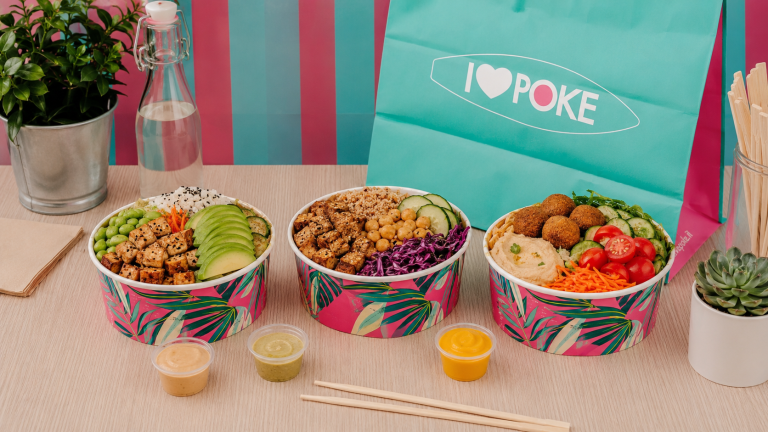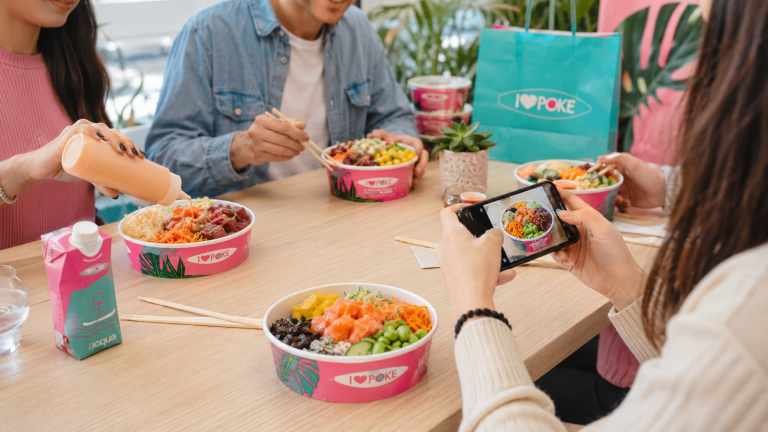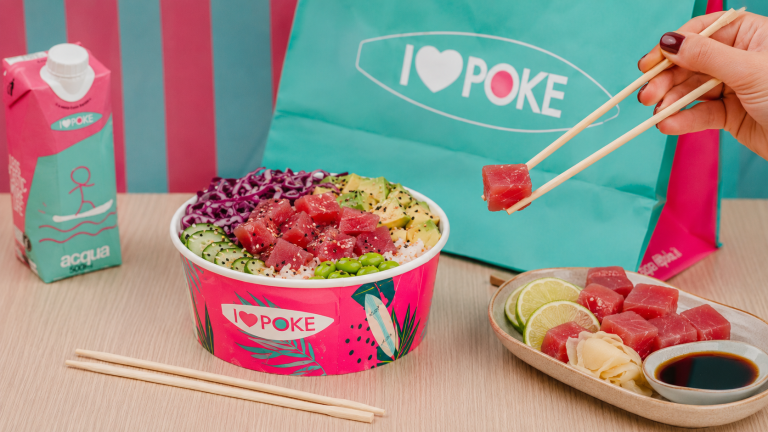


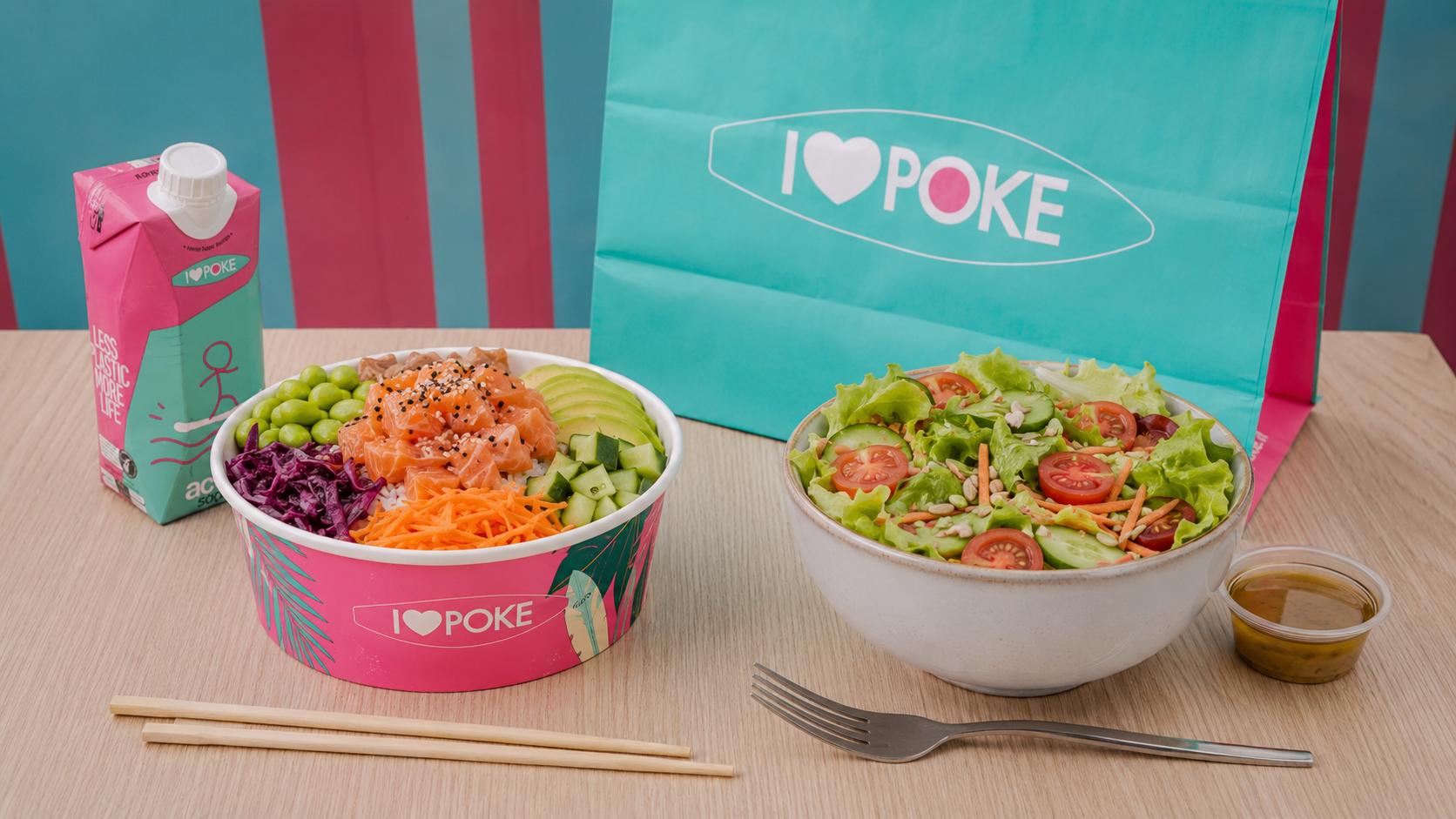
It often happens to group them together: colorful bowls, carefully arranged ingredients, mix of flavors and great room for customization. Yet, in the comparison buddha bowl vs poke, the similarities mostly stop at the visual aspect. Behind these two preparations there are indeed different ideas, different origins and also a distinct way of composing the dish.
Understanding the difference between buddha bowl and poke helps to choose more consciously, especially when looking for a practical but not trivial meal. If you are wondering poke or buddha bowl, here you will find a simple and clear comparison, without unnecessary technicalities.
Buddha bowl vs poke: conceptual differences between two seemingly similar bowls
The first important distinction concerns the concept behind the dish. The poke originates from Hawaiian tradition and revolves around a precise idea: a bowl built around well-recognizable ingredients, often with a base, a main component and various toppings that create balance between textures and taste.
La buddha bowl, instead, is a broader and more flexible format. It does not identify a single traditional recipe, but a way of assembling a complete and visually rich bowl, in which multiple elements coexist chosen according to personal preferences, seasonality or dietary style.
In practice:
- the poke has a more defined and recognizable identity;
- the buddha bowl is freer in interpretation;
- poke recalls a specific gastronomic culture;
- the buddha bowl is a creative container, often reinterpreted in many ways.
This is the key to truly understanding the comparison between buddha bowl and poke: not only what you find in the bowl changes, but also the way that dish is conceived.
Difference between buddha bowl and poke in ingredients
When closely observed, the ingredients tell very well the distance between the two formats. In poke, the composition usually follows a fairly clear logic: base, main ingredient, toppings and sauce. Each element contributes to a fresh, immediate and balanced taste ensemble.
The buddha bowl tends instead to present a more open structure. It can include grains, cooked and raw vegetables, legumes, seeds, creams, sauces and very different components. There is no single rule: it is precisely this freedom that defines it.
If you want to deepen your knowledge of bowls and get inspired by combinations and ideas, you can take a look at the section Recipes.
The base of the dish changes the experience
In poke, the base often has the task of accompanying the rest without stealing the spotlight. The ingredients are clearly distinguishable one by one and the final result maintains a clean, dynamic character, very easy to customize.
In the buddha bowl, on the other hand, the base can become a more central part of the whole. Often the dish is more composite, with elements coexisting in a less linear but more abundant way visually.
Dressings and combinations
Dressings also make a difference. In poke, sauce and toppings serve to enhance freshness and create a clear balance between savoriness, crunchiness, and creaminess. In the buddha bowl, dressings can have a more varied role and change a lot from one version to another.
For this reason, when talking about difference between buddha bowl and poke, it is not enough to look at the bowl from above: you have to consider the type of flavor construction.
Poke or buddha bowl: customization and meal style
Another decisive point is the customisation. Both dishes lend themselves to being adapted to personal tastes, but they do so in different ways.
Poke is designed to be customized within a very intuitive structure. You start with a base, add a main component, then choose toppings and sauce. The result is easy to imagine and compose, even when you have little time or want something practical but tasty.
The buddha bowl allows even more freedom, but precisely for this reason it can seem less immediate. There is not always a “typical” combination: much depends on the inspiration of the moment.
If you love building your bowl in a clear and versatile way, a useful page to explore is the one dedicated to Poke Bowl, where the format is explained simply.
- Poke: more linear in construction, easy to read, contemporary and immediate.
- Buddha bowl: freer, more open to personal interpretations, often more heterogeneous in composition.
So it is not about determining which is absolutely better, but about understanding which format is closer to your way of experiencing the meal.
Usage occasions: when to choose one bowl and when the other
In the comparison buddha bowl vs poke context also matters. There are moments when you want a bowl with a fresh, orderly profile that is easy to customize. In other cases, you prefer a freer bowl, rich in different elements and with a more creative imprint.
Poke is often chosen by those looking for a simple, tasty and customizable, experience, with well-distinguished ingredients and combinations that remain clear at the first bite. It is a format that adapts well to a dynamic lunch break, an informal dinner, or a moment when you want something varied without complications.
The buddha bowl may appeal more to those who like a dish with a less defined setup, perhaps with a wider presence of plant-based elements or with combinations built in a freer way.
If you want to get an idea of the available combinations and the type of experience offered by the brand, you can consult the Menu.
Who might like poke more and who might prefer the buddha bowl
The choice between poke or buddha bowl depends mainly on personal taste and what you are looking for at that moment.
You might like poke more if:
- you like a bowl with a clear identity;
- you appreciate well-recognizable ingredients;
- you seek variety without giving up simplicity;
- you love to customize the dish quickly and intuitively.
You might like the buddha bowl more if:
- you prefer freer compositions;
- you love very different mixes in the same bowl;
- you are intrigued by bowls with a more creative approach;
- you are looking for a format less tied to a specific tradition.
In many cases, the real answer is not to choose once and for all. It is to understand which bowl best reflects your moment, your appetite, and your style.
In the end, the difference between these two dishes is not a matter of fashion, but of experience: poke focuses on freshness, balance, and customization; the buddha bowl on a more open and interpretative composition.
If you want to delve deeper into the world of bowls and discover combinations, ingredients, and inspirations related to this format, you can start from the dedicated page on Poke Bowl and continue exploring the I Love Poke style.
FAQ
What is the main difference between buddha bowl and poke?
The main difference lies in the concept of the dish: poke has a more defined identity linked to Hawaiian tradition, while the buddha bowl is a freer format, built with very variable combinations.
Poke or buddha bowl: which is more customizable?
Both formats can be customized, but in different ways. The poke follows a clearer structure with base, main ingredient, topping, and sauce. The buddha bowl generally allows more absolute freedom in composition.
Do Buddha bowls and poke have the same ingredients?
They can share some ingredients, but they are not the same thing. In poke, the combination tends to follow a precise balance between base, topping, and dressing. In the buddha bowl, the elements can vary greatly from one version to another.
When to choose a buddha bowl instead of a poke?
A buddha bowl can be the right choice if you prefer a bowl with a freer composition and combinations less tied to a precise scheme. Poke is often ideal when you are looking for a fresh, clear, and easy-to-customize bowl.