
poke low carb Tag

When it comes to bowl low carb, the first idea that comes to mind is often that of a dish “without something”. In reality, the beauty of this approach lies exactly in the opposite: starting from fresh ingredients, well combined and customizable to create a complete, colorful, and never monotonous mix. The poke bowl, by its nature, is already a dish designed to be adapted — and a low carbohydrate version is perfectly achievable without sacrificing taste or satisfaction.

Before entering the combinations, it is worth clarifying a useful distinction: a keto bowl proper follows precise and very restrictive nutritional criteria, while a low carb or keto-friendly bowl simply reduces the main sources of carbohydrates — rice, starchy bases, sweet toppings, and sugary sauces — without necessarily respecting strict thresholds. In this article, we talk about the second version, suitable for those who want to lighten the dish without complicating their life.

How to build a low carb bowl: the basic scheme

To intuitively build a low carb bowl, it is convenient to think in layers. You don't need to be a nutrition expert: just a few well-chosen elements.

  • Vegetable base: mixed salad, baby spinach, cabbage, or a crunchy mix instead of rice
  • Main protein: salmon, tuna, chicken, tofu, eggs, or another source with a simple taste
  • Supporting vegetables: fresh, marinated, or slightly crunchy ingredients (cucumber, edamame, avocado, julienned carrot)
  • Creamy or savory component: avocado, light hummus, a touch of sesame cream
  • Final seasoning: to be used in balance — soy-based sauces, citrus or vinegar, preferably without added sugars

This scheme makes the low carb combinations easy to read already at the first taste. Each element has a precise role: the fresh part, the soft one, the savory one, and the final note that ties everything together.

Ingredients that raise carbohydrates (better to keep an eye on them)

Some classic components of the poke bowl can quickly increase the carbohydrate content without us noticing. Among these:

  • Traditional bases such as white rice or brown rice in large portions
  • Sweet toppings: mango, pineapple, corn in large quantities
  • Breaded crunchy elements or with added sugar
  • Sugary dressings: teriyaki, sweet and sour sauces, honey ponzu

Recognizing them does not mean eliminating them completely, but dosing them carefully when you want to keep the bowl on a lighter profile.

Low carb combinations to try right away

Here are some simple combinations to start with. They are versatile examples, designed for those who love clean but never trivial flavors.

1. Fresh and crunchy

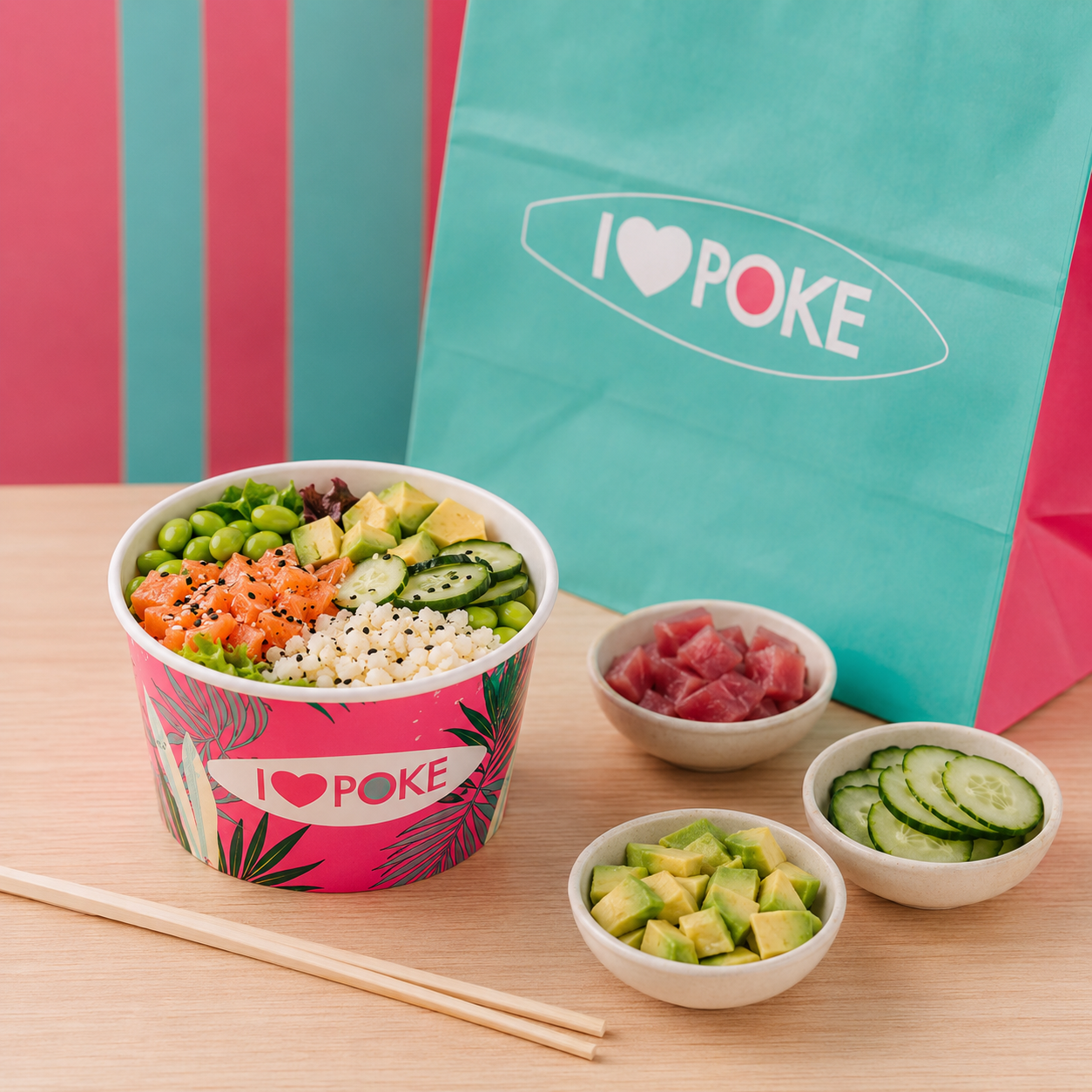
Mixed salad base + salmon or tuna + cucumber + edamame + avocado + light citrus dressing. The result is immediate, essential, and full of rhythm. It is among the low carb combinations easiest to appreciate because it focuses entirely on the purity of taste.

2. Soft and enveloping

Baby spinach base + chicken or tofu + avocado + julienned carrot + sesame sauce carefully dosed. The contrast does not come from crunchiness but from the balance between creaminess and stronger notes. Ideal for those looking for a low carb poke rounded taste.

3. Bold and flavorful

Green base + protein ingredient with a stronger flavor (yellowfin tuna, shrimp) + a crunchy element not breaded + a savory touch like wakame seaweed or spring onion + soy-based sauce in measured quantity. One savory element, one crunchy, one softer: these three are enough to create depth without weighing down.

4. Green and super versatile

Bowl built almost entirely on green or light ingredients — spinach, cucumber, edamame, avocado, chives — with a neutral protein and a dressing that adds liveliness. It is the easiest formula to reinterpret differently each time.

Poke low carb: how to maintain taste and variety

One of the most common questions is how to make a low carb poke interesting without relying on too many ingredients. The answer is simple: work on combinations, not quantity.

To give variety to a bowl, you can focus on these aspects:

  • Texture contrast: alternate crunchy and soft elements
  • Temperature: fresh ingredients and more enveloping components create a good balance
  • Flavor intensity: better a well-dosed strong ingredient than many competing flavors
  • Dressing: it must accompany, not cover

La low carbohydrate diet{:rel=”nofollow”} has many variants and interpretations: in the context of a bowl, there is no need to follow a rigid protocol. Just reduce the main starchy sources and choose fresh ingredients consciously.

When to choose the salad base

The salad base is not a fallback: it can become the strength of the entire composition, especially when you want to enhance fresh ingredients, well-balanced sauces, and different textures.

Choosing it makes sense especially when:

  • you want a bowl with a fresher and more immediate profile
  • you prefer to give more space to the main ingredients
  • you are looking for an easy mix to customize
  • you love contrasts between crunchiness and creaminess

The leaves help to better distribute the flavors and keep the bowl enjoyable from start to finish, enhancing each component without creating an overly heavy combination.

How to give more satisfaction to low carb combinations

The most common risk when preparing a bowl low carb, is to think only about what to remove. Instead, it is better to think about what adds experience to the dish: a crunchy note, a creamy component, an aromatic touch, a carefully chosen dressing.

Some small attentions that make a difference:

  • Choose no more than a couple of ingredients with a very intense taste
  • Always include at least one element that gives contrast to the bite
  • Avoid mixes that are too confused or overcrowded
  • Aim for a coherent flavor palette — either fresh or more decisive, but not both to excess

The’avocado{:rel=”nofollow”}, for example, is one of the most versatile ingredients for low carb bowls: it provides good fats, creaminess, and a neutral flavor that suits both citrus dressings and more intense sauces.

In practice, a well-made bowl does not need to be complicated. The best low carb combinations are often the most straightforward: each ingredient is well perceived and contributes to the whole without overlapping others.

If you want to start with simple ideas and find the combination that best suits your taste, the best way is to explore the menu of ilovepoke.it and let yourself be inspired by a bowl to customize with balance and freshness.

FAQ

What is meant by low carb bowl?

A low carb bowl is a composition that reduces the main sources of carbohydrates — rice, starchy bases, sweet toppings, and sugary sauces — focusing on vegetable bases, simple proteins, fresh vegetables, and well-balanced dressings. It is not necessarily a keto diet: it is simply a more conscious way to build the dish.

What is the difference between a keto bowl and a low carb bowl?

A keto bowl follows precise and very restrictive nutritional criteria on total carbohydrates. A low carb or keto-friendly bowl simply reduces the ingredients richest in starches and sugars without adhering to strict thresholds. It is a more flexible approach suitable for everyday life.

What is the best base for a low carb poke?

The salad base is among the most practical choices: it enhances fresh ingredients, lightens the structure of the dish, and pairs easily with delicate or more decisive flavors. Alternatively, baby spinach, cabbage, or leafy vegetable mixes also work well.

Which ingredients raise the carbohydrates in a bowl?

Traditional bases like rice in large portions, sweet toppings like mango and pineapple in large quantities, breaded crunchy elements, and sugary dressings (teriyaki, sweet and sour sauces) are the main ingredients to watch when you want to keep the bowl on a low carb profile.

How to create low carb combinations without giving up on taste?

The simplest way is to work on contrasts of texture, a creamy component, a crunchy note, and a dressing that ties the flavors together without covering them. Better a few well-chosen ingredients than an overcrowded mix.

How many ingredients are needed for a well-made low carb bowl?

Usually a few elements are enough: a base, a main protein, two or three supporting vegetables, and a final dressing. Simplicity helps keep the mix balanced, readable, and enjoyable from start to finish.
When it comes to bowl low carb, the first idea that comes to mind is often that of a bowl “without something”. In reality, the beauty of this style lies precisely in the opposite: starting from simple, fresh, and well-matched ingredients to create a complete, colorful mix that is easy to customize. Whether you prefer a light lunch break or a dinner with a strong taste, the low carb combinations can be very varied and never monotonous.

The secret is to build the bowl with balance, choosing a more essential base and focusing on textures, contrasts, and seasonings that give character. Even those who love the fresh and immediate taste of low carb poke can find many practical ideas to replicate or use as inspiration.

If you want to delve deeper into this style of composition, you can also read Relatedtitle:Pokelowcarb, useful for discovering other ideas in line with this approach.

Low carb bowl: where to start to create simple combinations

To build a low carb bowl intuitively, it is best to think in layers. There is no need to complicate the choice: just a few well-matched elements are enough.

  • Base: salad, leafy vegetables, or a crunchy mix.
  • Main ingredient: a protein source with a delicate or more intense taste.
  • Supporting vegetables: fresh, marinated, or slightly crunchy ingredients.
  • Creamy or savory part: to give roundness to the bite.
  • Final seasoning: to be used in balance to tie everything together.

This scheme works well because it makes the low carb combinations easy to read even at the first taste. Each element has a precise role: there is the fresh part, the softer one, the savory one, and the one that adds a livelier final note.

Low carb combinations to try right away

If you are looking for concrete ideas, here are some simple combinations to start with. They are versatile examples, designed for those who love clean but not trivial flavors.

1. Fresh and crunchy

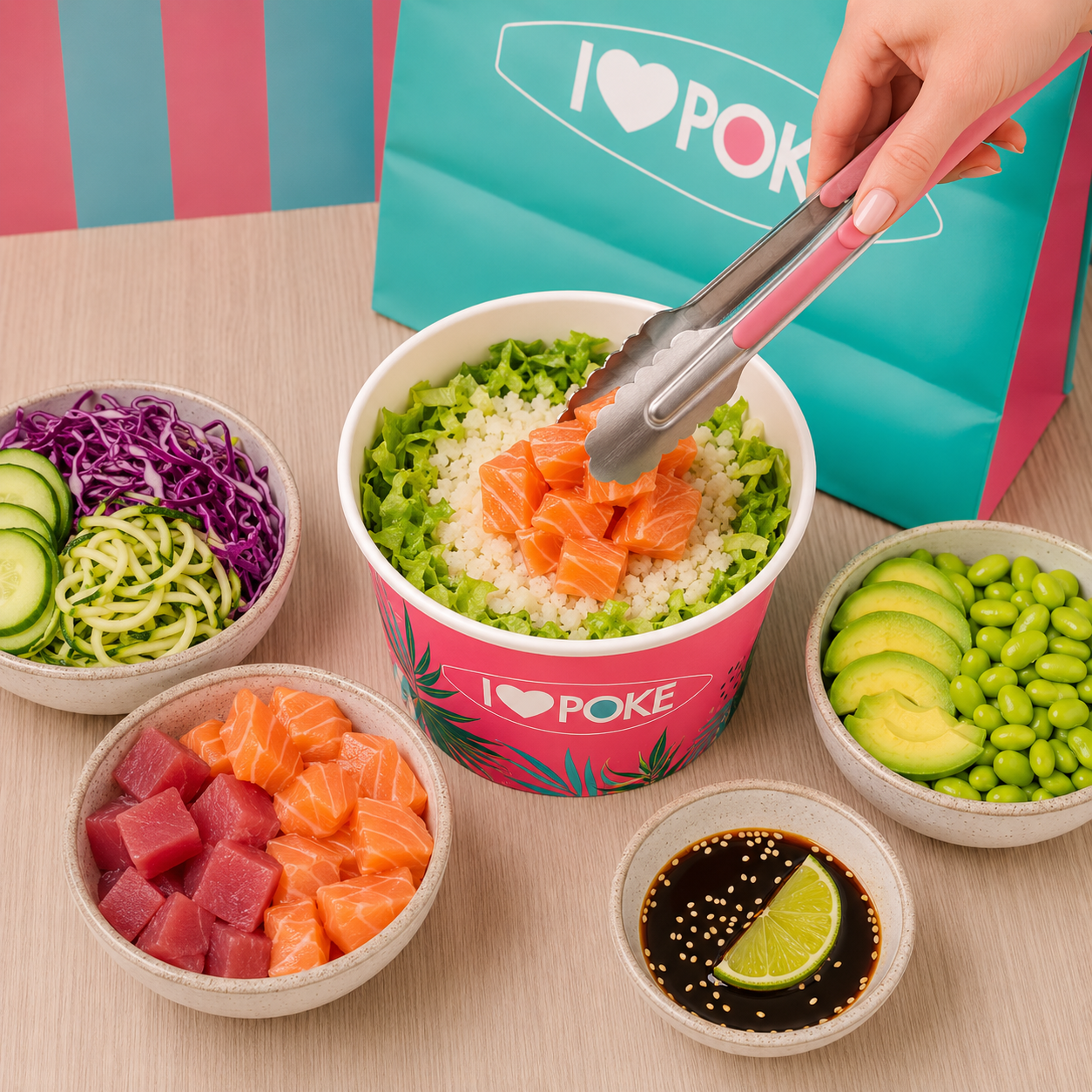
A base of mixed salad with ingredients that have a fresh profile and distinct textures is perfect for those who want an immediate bowl. It works well with crunchy vegetables, a light creamy component, and a citrusy or delicate dressing. The result is simple but full of rhythm.

This is one of the low carb combinations easiest to appreciate because it focuses entirely on the cleanliness of taste and the sensation of freshness.

2. Soft and enveloping

If you prefer a bowl with rounder flavors, you can choose a green base and pair it with ingredients with a soft texture, with a well-measured savory part and a sauce capable of bringing everything together. In this case, the contrast does not come from crunchiness but from the balance between creaminess and more pronounced notes.

It is an ideal solution for those looking for a low carb poke full-flavored but always simple to compose.

3. Bold and flavorful

For a bowl with a more pronounced character, the advice is to work with ingredients with personality, balancing them with a fresh base. Here the trick is not to overdo it: one savory element, one crunchy, and one softer are enough to create depth without weighing down the mix.

When the composition is well thought out, even a simple bowl manages to have a rich and recognizable taste.

4. Green and super versatile

Among the simplest options is the bowl built almost entirely on green or light ingredients, with a dressing that adds liveliness. It is a very practical choice because it easily adapts to personal tastes and leaves room for customization.

Those who like to vary often find in this formula a perfect base to reinterpret differently each time.

Poke low carb: how to maintain taste and variety

One of the most common questions is how to make a low carb poke interesting without relying on too many ingredients. The answer is simple: work on combinations, not on quantity.

To give variety to a bowl, you can focus on these aspects:

  • Texture contrast: alternate crunchy and soft elements.
  • Temperature: fresh ingredients and more enveloping components create a good balance.
  • Flavor intensity: better a well-measured bold ingredient than many competing flavors.
  • Dressing: must accompany, not cover.

Often, in fact, a bowl works better when it is made with a few recurring but well-harmonized ingredients. This is what makes the low carb combinations practical in everyday life: you can start from a simple structure and change its character with small details.

To find ideas to adapt to your taste, you can also take a look at the section Recipes, where you can get inspired by easy ideas and always new combinations.

When to choose a salad base in a low carb bowl

The salad base is one of the most natural choices for a low carb bowl, but it should not be seen as a fallback. On the contrary, it can become the strength of the entire composition, especially when you want to highlight fresh ingredients, well-balanced sauces, and different textures.

Choosing it makes sense especially when:

  • you want a bowl with a fresher and more immediate profile;
  • you prefer to give more space to the main ingredients;
  • you are looking for an easy-to-customize mix;
  • you love contrasts between crunchiness and creaminess.

The salad base also works very well when the dressing plays a central role. The leaves, in fact, help to better distribute the flavors and keep the bowl pleasant from start to finish. Moreover, they allow you to enhance different ingredients without creating an overly heavy combination.

If you want to explore possibilities and pairings, on the page Menu you can check the available options and find the right inspiration for your next bowl.

How to give more satisfaction to low carb combinations

When preparing a low carb bowl, the most common risk is to think only about what to remove. Instead, it is better to think about what adds experience to the dish: a crunchy note, a creamy component, an aromatic touch, a well-chosen dressing.

To achieve a more satisfying result, some small attentions can help:

  • choose no more than a couple of ingredients with a very intense taste;
  • always include at least one element that gives contrast to the bite;
  • avoid overly confused mixes;
  • aim for a coherent flavor palette, fresh or more decisive.

In practice, a well-made bowl does not need to be complicated. The best low carb combinations they are often the most straightforward, where each ingredient is well felt and contributes to the whole without overlapping the others.

If you want to start with simple ideas and find the combination that best suits your taste, the best way is to explore the Menu and let yourself be inspired by a bowl to customize with balance and freshness.


FAQ

What is meant by low carb bowl?

A low carb bowl is a composition that reduces the richest carbohydrate part and focuses on a green base, fresh ingredients, different textures, and well-balanced dressings.

What is the best base for a low carb poke?

The salad base is among the most practical choices because it enhances fresh ingredients, makes the bowl lighter in texture, and pairs easily with both delicate and stronger flavors.

How to create low carb combinations without giving up on taste?

The easiest way is to work on contrasts of texture, a creamy component, a crunchy note, and a dressing that ties the flavors together without overpowering them.

How many ingredients are needed for a well-made low carb bowl?

Usually a few well-chosen elements are enough: a base, a main ingredient, two or three supports, and a final seasoning. Simplicity helps keep the mix more balanced and enjoyable.

When talking about low carb poke, the basic idea is simple: to build a bowl that focuses on fresh, tasty, and balanced ingredients, reducing the elements richest in carbohydrates. It’s not about giving up the pleasure of a colorful and satisfying meal, but about choosing the base, toppings, and dressings more carefully.

In a poke bowl, customization really makes a difference. And this is exactly where a low carb bowl becomes a concrete option for those looking for a lighter alternative in composition, without losing variety and taste. The goal is not to complicate life with calculations or rigid rules, but to understand which combinations work best in everyday life — even for a simple low carb lunch to order or imagine.

What low carb poke means, simply

In the context of a poke bowl, “low carb” means giving more space to plant-based and protein ingredients, reducing those that usually occupy most of the bowl, like rice or similar bases. It’s a practical approach: instead of starting with a large cereal base, the bowl is built around salad, fresh vegetables, and carefully chosen ingredients.

The low carbohydrate diet — also known as low carb diet — is based precisely on the principle of reducing carbohydrate intake by favoring proteins and good fats. Applied to poke, this concept translates into concrete and immediate choices, without having to disrupt the meal experience.

This type of composition is especially interesting when looking for a versatile, fresh meal that is easy to adapt to personal tastes. A bowl of this kind is suitable for lunch breaks, informal dinners, or those moments when you want something complete but not overly heavy.

How to compose a low carb poke bowl starting from the base

Choosing the base is the first really important step. For a low carbohydrate bowl, the most intuitive solution is to opt for a salad base or for a combination where vegetables play a predominant role, replacing the classic rice base in whole or in part.

A green base helps keep the bowl fresh and pleasant, leaving more room for toppings. The result is a composition that remains rich in perception but more essential in structure — and it is precisely this balance that makes poke without rice a surprisingly satisfying choice.

Why the salad base works for a low carb lunch

If you are thinking of a low carb lunch, the salad base is often the most straightforward choice because:

  • it makes the bowl fresher and more immediate;
  • it pairs easily with different toppings without weighing down;
  • it allows you to enhance textures and flavors lightly;
  • it naturally reduces the total carbohydrate content of the bowl.

Those who love the poke format but want a more vegetable-oriented alternative may also find it useful to explore how to include the poke bowl in a balanced diet, to understand how this type of choice integrates into a conscious eating routine.

Low carb poke ingredients: what to choose and what to reduce

After the base, toppings come into play. Here it’s best to follow a simple logic: choose fresh, varied, and well-matched ingredients, avoiding overloading the bowl with too many elements all at once.

Toppings that work in a low carb protein bowl

In a well-built low carb poke, the best toppings are those that bring texture, flavor, and protein contribution without raising the carbohydrate content too much:

  • Vegetables are essential to give dynamism to each bite. In a poke bowl with tofu, it is useful to alternate crunchy ingredients with softer or juicier ones, avoiding a uniform effect and making the tasting more interesting. — to add volume and texture (cucumber, red cabbage, edamame, carrot);
  • Ingredients with fuller flavor — to create contrast and interest in each bite;
  • Protein components — fresh fish, tofu, shrimp, or chicken help make the bowl truly complete;
  • Dressings used in balance — to accompany without overpowering the rest.

It is useful to remember that proteins play a fundamental role in the feeling of satiety: a low carb protein bowl does not leave you feeling like you have eaten little, precisely because the structure of the ingredients is designed to nourish and satisfy.

What to reduce in the low carb poke

The point is not to eliminate everything, but to reduce elements that tend to become predominant in terms of carbohydrates. Among these:

  • hearty bases like white rice or brown rice in large quantities;
  • sweet or very elaborate toppings present in generous amounts;
  • rich dressings or those with a marked sugary profile.

A practical approach can be this:

  1. Reduce the richer base and increase the vegetable portion;
  2. Prefer simple toppings over overly elaborate combinations;
  3. Measure the dressing to keep the taste clean;
  4. Focus on ingredient variety rather than the quantity of just one.

Practical examples of low carb poke to customize

To understand how a composition of this type works in practice, it is useful to imagine some simple structures. These are not rigid recipes, but starting points to adapt to your own tastes.

Fresh and essential low carb bowl

Salad base, crunchy vegetable toppings, a well-defined protein component, and a delicate dressing. It is the ideal solution for those looking for a straightforward bowl, clean in flavors and easy to appreciate even at lunch break.

Low carb lunch rich in textures

Green base, mix of soft and crunchy ingredients, some stronger notes to give character, and a dressing used in balance. The difference is made by contrasts: such a bowl is dynamic and never monotonous, despite the reduction of carbohydrates.

Poke low carb with a bold flavor

Vegetable base, few carefully chosen toppings, savory accents, and a more essential construction. It is the right idea for those who prefer clear combinations, where each ingredient is clearly felt without creating confusion on the palate.

In all three cases, the principle is the same: less volume in the richer base, more attention to the quality of the composition. This is what makes a low carb bowl truly pleasant and easy to include in your routine.

How to choose a low carb lunch without complicating your life

One of the advantages of poke is its immediacy. Even when you want a low carb lunch, you don't need to turn the choice into something technical or stressful. Just follow a few clear criteria: start with a greener base, select consistent toppings, and don't overdo additions that change the balance of the dish.

A simple way to think about the composition is to consider the bowl as three layers:

  • Fresh base as a starting point — mixed salad or baby spinach;
  • Well-matched main ingredients to provide structure and protein content;
  • Finishes and dressings to complete without weighing down.

This approach makes the choice more intuitive and helps find a combination that aligns with your dietary style, but is also truly enjoyable to eat. If you want to explore the available options, you can visit the ordering page and check the ingredients of your preferred bowls in the product tab.

FAQ about low carb poke

What is meant by low carb poke?

A low carb poke is a bowl made by reducing the ingredients richest in carbohydrates — primarily the rice base — and giving more space to salad, vegetables, protein toppings, and dressings used in balance.

What is the best base for a low carbohydrate bowl?

The salad base is generally the most suitable choice: it makes the bowl fresher, lightens the composition in terms of carbohydrates, and pairs easily with different toppings without compromising taste.

Is a low carb bowl suitable for lunch break?

Absolutely yes. It is a practical and quick solution to compose, varied in flavors, and capable of satisfying thanks to the presence of well-balanced protein and vegetable ingredients.

How to avoid an unsatisfying low carb poke?

The secret is to focus on variety and contrasts: green base, toppings with different textures, a well-defined main protein component, and a dressing that accompanies without overpowering the other flavors.

Is low carb poke also suitable for those who do not follow a specific diet?

Yes. A low carbohydrate bowl can be a daily choice even for those who simply want a lighter meal in structure, fresh and satisfying, without following a strict dietary regimen.

What is the difference between a traditional poke and a low carb poke?

The main difference concerns the base: in traditional poke, rice is used as the central element, while in the low carb version it is replaced (in whole or in part) by salad or leafy vegetables. The rest of the composition — toppings, proteins, and dressings — remains similar in logic but is chosen with more attention to carbohydrate content.

Home Icon Home Menu Icon Menu Order Now Icon Order now Register Icon Register