



30 Mar Poke keto: how it is possible and what to choose for a keto-friendly bowl
When it comes to poke keto, the starting point is almost always the same: the poke bowl is a deeply customizable dish, and this flexibility makes it adaptable even for those following a low-carb diet. However, not all combinations are automatically compatible with a low-carb approach. For this reason, it makes sense to think in terms of choices keto-friendly, rather than strict rules to follow to the letter.
A keto poke bowl is built by understanding which ingredients tend to contain fewer carbohydrates and which, instead, can quickly raise the total composition. However, there is a distinction worth making right away: a bowl keto in the strict sense requires precise macro control and a sharp cut of carbohydrates; a bowl keto-friendly is instead a composition more oriented towards light and vegetable ingredients, without necessarily respecting strict thresholds. In this article, we focus on the second meaning, which is the most feasible when ordering or composing a poke.
Poke keto or keto-friendly: a distinction that matters
The term poke keto is often used generically, but in practice, it must be interpreted with balance. A bowl does not automatically become keto just because it contains proteins or vegetables: what matters most is how the ingredients are combined and the role each element plays in the final composition.
It is more correct to talk about keto-friendly bowl when the choice of ingredients aims to reduce the components richer in carbohydrates, leaving room for fresh, simple, and nutritious elements. It is not about overturning the poke, but about exploiting its versatile nature to build a mix more consistent with one's dietary preferences.
Thinking in these terms is especially useful if:
- you want a structurally lighter bowl, without a traditional carbohydrate-rich base;
- you prefer to give space to vegetables, proteins, and essential toppings;
- you are looking for a customizable option without sacrificing taste;
- you want to better navigate ingredients that have a greater impact on the bowl's profile.
If you want to explore the topic more broadly, you can read this guide on how to include the poke bowl in a balanced diet, also useful for understanding how to consciously balance macronutrients.
How to choose the base for a keto poke bowl
The base is the first and most decisive element to consider when you want to build a low carb poke. In the classic poke, rice often represents the most significant component in terms of carbohydrates. Replacing it — or reducing it — is the change that most affects the bowl's final profile.
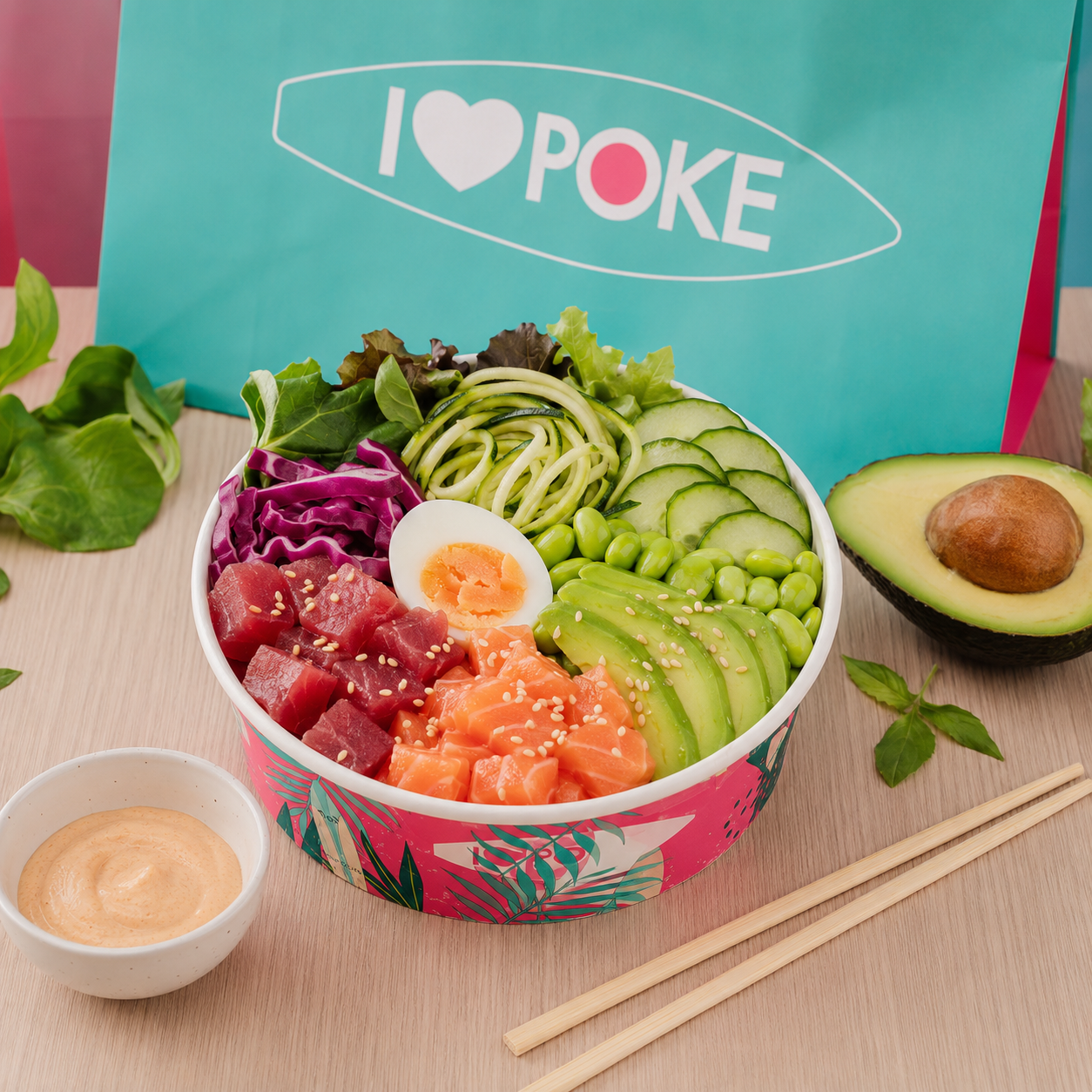
A keto poke base effective is one composed mainly of fresh vegetables: crunchy leaves, mixed salads, or other vegetable ingredients that add volume without weighing down the composition. This type of base also better enhances toppings and dressings, allowing flavors to emerge more cleanly.
If you are curious to know what distinguishes different plant bases from a nutritional point of view, you can find useful insights in the entry dedicated to leafy green vegetables on Wikipedia, which offers a general overview of the characteristics of these ingredients.
Proteins: focus on simplicity
After the base, the come into play. proteins. In a bowl designed with a keto-friendly approach, the most straightforward choice is to opt for proteins with a simple profile, without breading, elaborate marinades, or preparations that add hidden carbohydrates.
Salmon, tuna, and raw fish in general are among the options most consistent with a poke without rice and low carb approach: they add character to the bowl without altering its balance. Simple plant-based proteins can also work well, provided they are not prepared with ingredients that increase carbohydrate content.
The underlying logic is simple: fewer superfluous elements, more balance in the final mix.
Toppings and textures: the detail that changes everything
Toppings are often the real turning point of a keto-friendly bowl. A well-constructed bowl should not be monotonous: even in a low carb version, it can be rich in textures, flavor contrasts, and freshness. The goal is to choose ingredients that add character without shifting the overall balance too much.
Among the keto poke ingredients that work best in this category:
- Fresh and crunchy vegetables: cucumber, avocado, edamame, sprouts;
- Creamy elements used wisely: sliced avocado or guacamole in small amounts;
- Seeds and texture: sesame seeds, a few sliced almonds — to be used sparingly;
- Carefully chosen dressings: low-sugar sauces, light ponzu, sesame oil in small doses.
The beauty of poke is precisely this compositional freedom: you can build a custom bowl while maintaining a simple but satisfying experience.
The ingredients that raise carbohydrates (and to watch out for)
If the goal is a keto poke bowl, there are elements that deserve more attention. Not because they should be eliminated entirely, but because they can quickly change the profile of the bowl.
The main aspects to consider:
- Traditional bases (white rice, brown rice, quinoa): often represent the most significant portion of carbohydrates;
- Sweet or sugary toppings: mango, pineapple, corn, teriyaki sauces;
- Rich or sugary sauces: some oriental sauces contain significant amounts of added sugars;
- Added crunchy ingredients: croutons, fried wonton, crispy onion — they seem like a detail but impact more than expected.
A common mistake is adding too many “extra” elements in the same bowl: even interesting ingredients individually, if all combined, can move the composition away from the initial keto-friendly idea. Less is often more.
To delve into how carbohydrate metabolism works and the ketogenic diet from a scientific point of view, the dedicated Wikipedia entry offers a clear and well-documented summary.
How to compose a keto-friendly bowl: a practical approach
To guide you without complicating your life, you can think of the bowl composition as a simple sequence in four steps:
- Vegetable base: leaves, fresh vegetables, crunchy mix without rice;
- Essential protein: raw fish, salmon, tuna or other simple protein;
- Fresh and balanced toppings: avocado, cucumber, edamame, sesame seeds;
- Dressing in moderationlight sauce, sesame oil, ponzu — without overdoing it.
This approach helps create a more linear bowl without losing variety. Customization remains central, but with a clearer direction.
You can also think by subtraction: when in doubt about a combination, a more essential bowl is often the one that results in more focused flavors and closer to the idea of poke without rice keto-friendly.
If you want to compose your bowl more consciously, the best starting point is to check the ingredients of the available combinations: on the Menu you can navigate between bases, proteins, and toppings to find the solution that best suits your needs.
—
FAQ about keto poke and low carb bowls
Can a poke bowl really be keto?
It depends on how it is composed. More than talking about poke keto in an absolute sense, it is often more correct to talk about keto-friendly bowl: a composition built with ingredients more consistent with a low carb approach, replacing the traditional base with vegetables and carefully choosing toppings and sauces.
What is the best base for a keto poke bowl?
A base made mainly of fresh vegetables — mixed salads, crunchy leaves — is the choice most in line with a keto poke base, because it significantly reduces the carbohydrate content compared to rice or other cereals.
Do sauces really affect a keto poke?
Yes, they can have a big impact. Many oriental sauces contain added sugars that are not always obvious. In a keto poke bowl, it is advisable to opt for light dressings such as ponzu, sesame oil, or low-sugar sauces, using them in moderation.
Which toppings should I avoid if I want a more low carb poke?
Toppings to watch out for are those with an obvious sugar component (mango, pineapple, corn) and fried crunchy ingredients (wonton, fried onion). This does not mean eliminating them altogether, but using them in balance so as not to alter the overall profile of the bowl.
Can I eat avocado in a keto-friendly poke?
Yes, avocado is one of the ingredients most consistent with a low carb pokeapproach: it contains good fats, few net carbs, and adds creaminess to the bowl. It is among the most recommended toppings in a keto-friendly composition.
How do I know if a bowl suits my preferences?
The most practical way is to analyze the composition ingredient by ingredient: base, protein, topping, and dressing. If in doubt, check the ingredient list on the product sheet. Thinking about the whole — and not isolated single elements — is the key to a more conscious choice.


