

30 Mar Poke fish-free: how to build a tasty and complete plant-based bowl
Not everyone looks for fish when ordering a bowl. Sometimes it's a matter of preferences, other times a desire for change. This is where the growing interest in fish-free poke comes from: a versatile, fresh choice full of possibilities, suitable for those who want a satisfying meal without giving up variety. And the good news is that this option is not only designed for those who follow a vegetarian diet: anyone can choose it simply to vary taste and discover new combinations.
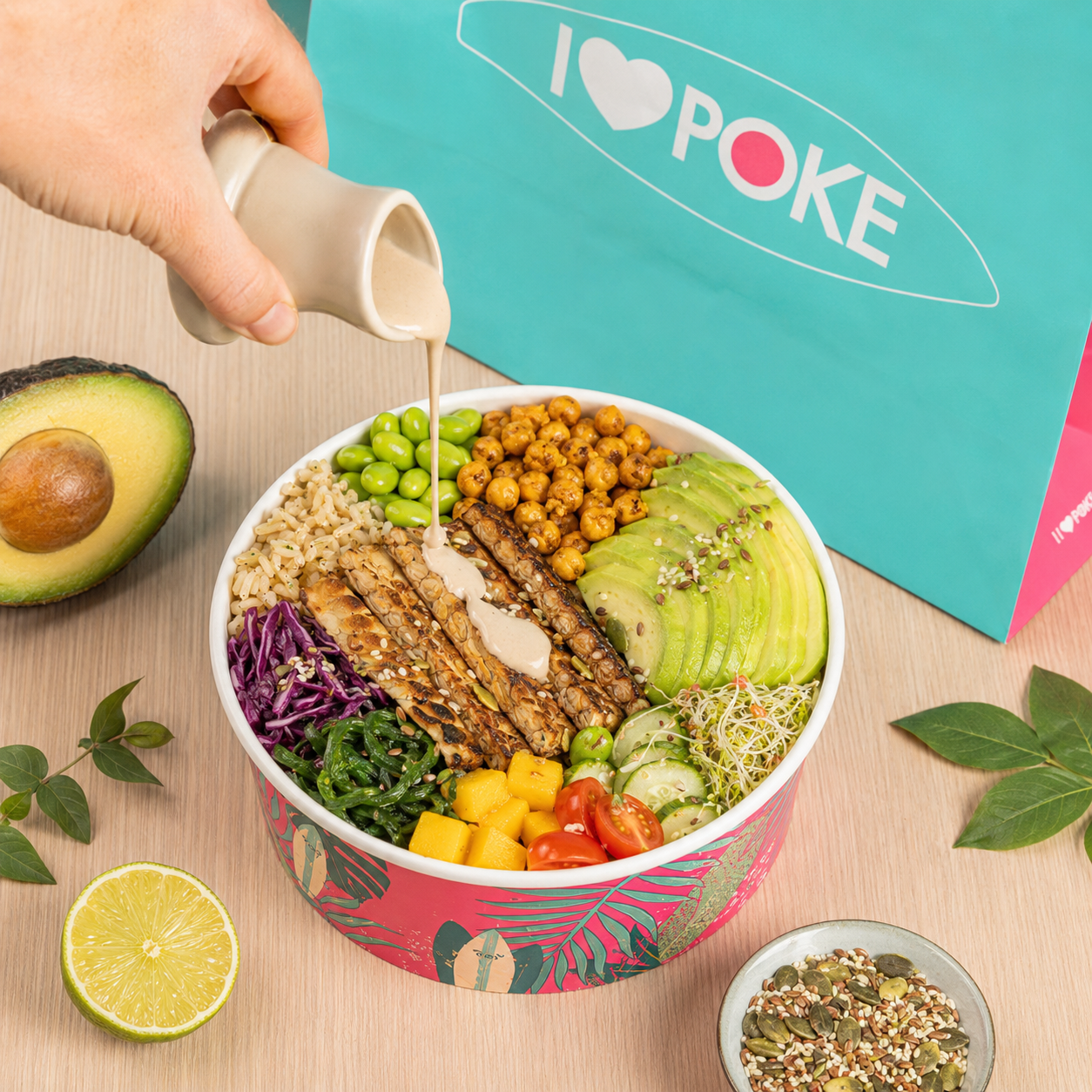
The poke format naturally lends itself to this type of experimentation. Just shift the focus from fish ingredients to plant-based ones to get a completely different bowl, but equally satisfying. The key lies in how it is built: base, plant protein, fresh vegetables, crunchy toppings, and a balanced sauce. Each element has a precise role in creating harmony on the plate.
Why choose a bowl without fish — even without being vegetarian
Vegetarian poke has won over a much wider audience than expected. More and more people who eat everything occasionally choose a bowl without fish ingredients, simply to lighten the routine or explore different flavors.
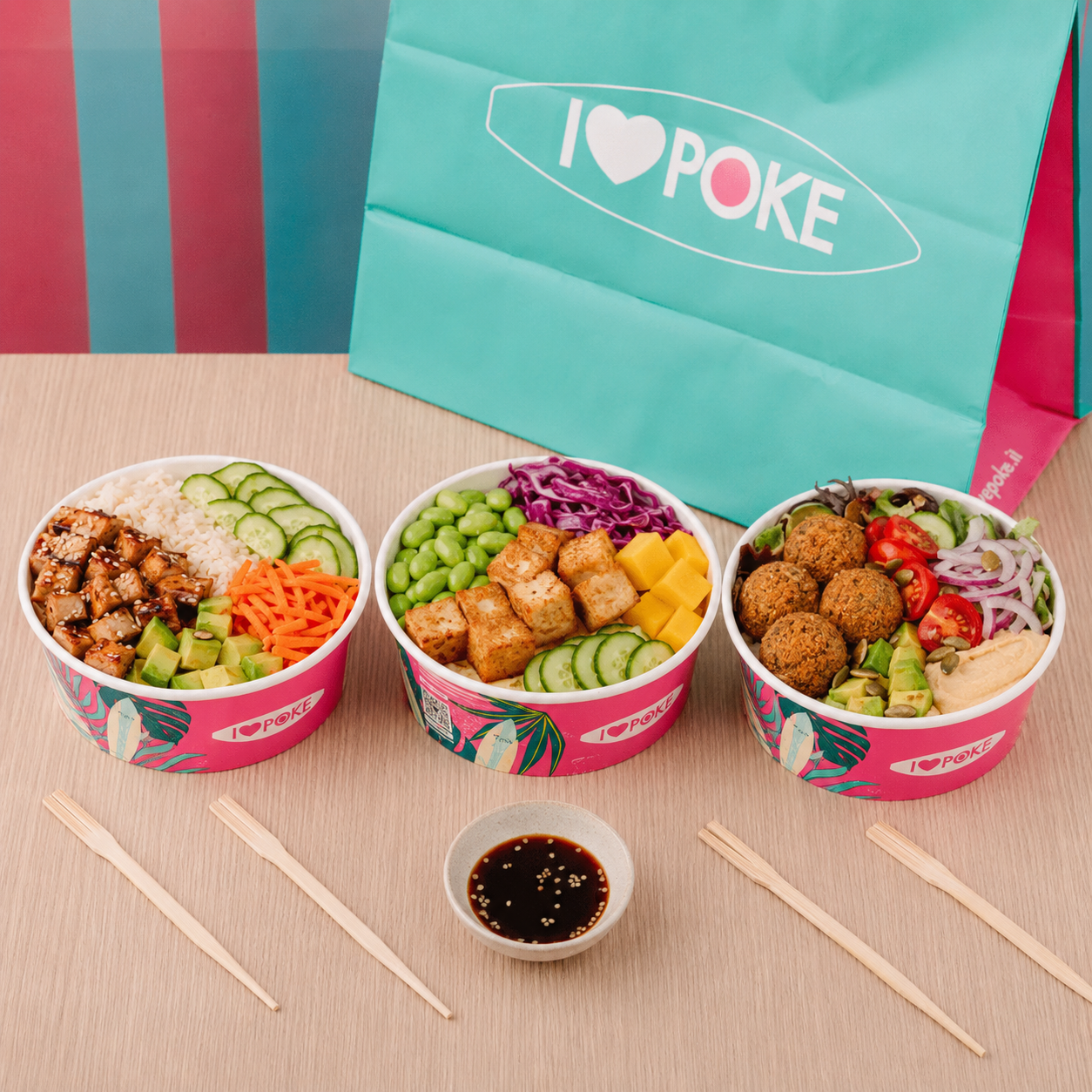
The tofu, for example, is an ingredient often known by name but underestimated in cooking. When included in a well-constructed bowl, it completely changes perspective: it becomes soft, flavorful, and capable of effectively holding the dressings. The same goes for edamame, young soybeans that add color, texture, and a fresh, light plant note.
A bowl without fish works when it manages to play on interesting contrasts:
- textures: soft ingredients next to crunchy elements;
- flavoursflavors;
- : delicate notes balanced by stronger accents;colors.
: a visually rich dish is even more inviting before tasting.
These three elements, working together, make fish-free poke a satisfying choice at any time of day.
Tofu and edamame: the protagonists of the vegetarian poke bowl.
When talking about alternatives to fish in poke, tofu and edamame are the first ingredients to consider. Both naturally fit into the bowl structure and combine easily with different bases, vegetables, and dressings.
Tofu: soft, neutral, and easy to pair
- Tofu is one of the most versatile plant-based ingredients for a poke bowl. Its neutral flavor makes it a great starting point: it does not overpower other elements and can be enriched by sauces and dressings. In a bowl, it works particularly well when paired with:;
- a neutral base like white rice or brown rice;
- avocado, to add creaminess;
- crunchy vegetables like cucumber, carrots, or cabbage;.
a sauce that ties everything together without covering the individual flavors.
The result is a balanced dish where each component has space and contributes to the final outcome.
Edamame: color and character in every bowl.
Precisely the absence of fish, in this context, opens the way to freer combinations: every vegetable ingredient can take the leading role without competing with dominant fish flavors.
How to build a poke with vegetable ingredients that is truly complete
One of the most common doubts when choosing a bowl without fish concerns the final satisfaction: will it be enough? The answer almost entirely depends on how it is constructed. It's not about adding as many ingredients as possible, but about choosing well the ones used.
An effective structure for a complete vegetarian poke follows a simple logic:
- Base: rice, brown rice or neutral-based alternatives that act as the structure;
- Vegetable protein: tofu or edamame as the main ingredient;
- Vegetables: at least two different types for texture and color;
- Topping: one or two elements that add personality (seeds, nuts, crispy onions);
- Sauce: a dressing that unifies the flavors without overpowering them.
When these elements interact with each other, the result is a bowl pleasant to eat from start to finish. Personalization is fundamental: it allows building a mix consistent with one's tastes, without forcing.
For those who want to explore further combinations and be guided by already studied pairings, a good resource is the article on vegan poke bowls and the best healthy combinations, useful for deepening the topic with concrete ideas.
Practical ideas for lunch and dinner
The strength of a poke bowl without fish also lies in its adaptability. At lunch it can be a quick, colorful, and nutritious solution. At dinner it becomes an informal but refined dish, perfect when you want something fresh and different from the usual.
Some practical tips to vary without complicating life:
- At lunch: focus on linear combinations, with few recognizable ingredients and a sauce with a clean taste;
- At dinner: experiment with more contrasts, adding crunchy toppings or stronger notes in the sauce;
- To avoid boredom: alternate the bases and change the pair of main vegetable ingredients each time.
This flexibility makes poke suitable for different moments and occasions. There is no need to overturn your habits: just change perspective and discover that even without fish a bowl can surprise.
Vegetable pairings to try to avoid repetition
Variety is one of the strengths of a well-thought-out vegetarian poke bowl. Working on combinations is the best way to avoid falling into a routine:
- Essential mixes: few ingredients, each with a defined role, for a clean and straightforward bowl;
- Richer combinations: more elaborate toppings and sauces for those who love more complex flavors;
- Seasonal versions: fresh seasonal vegetables that change the composition over time.
The goal is always the same: to create a dish where flavors, colors, and textures complement each other. For those who want to further explore this approach, the article dedicated to vegan poke bowls with the best healthy combinations offers concrete ideas and already tested pairings.
Choosing a bowl without fish: the simplest way to start
Often the best choice is the most intuitive: start with the flavors you really like and build a coherent bowl around them. Fish-free poke offers a lot of freedom but does not require complications. Just imagine the result you want to achieve — fresher, creamier, crunchier, more delicate — and select the ingredients accordingly.
If you want to vary and discover new plant-based combinations, the best starting point is to get inspired by already constructed proposals, understand which ingredients suit your tastes, and start personalizing from there.
—
FAQ about fish-free poke
What can you put in a fish-free poke?
In a fish-free poke, you can use plant-based ingredients such as tofu, edamame, avocado, cucumber, carrots, cabbage, crunchy salads, various seeds, and sauces. The idea is to create a balanced mix between base, textures, and complementary flavors.
Is a bowl without fish also suitable for those who are not vegetarian?
Yes, absolutely. A bowl without fish can also be chosen by those who do not follow a vegetarian diet but simply want to vary. It is a practical and versatile solution, ideal for those who want to experiment with different combinations without disrupting their habits.
How to make a vegetarian poke more satisfying?
To make a vegetarian poke truly satisfying, it is best to combine a neutral base, a main plant-based ingredient like tofu or edamame, vegetables with different textures, one or two toppings, and a sauce that ties all the flavors well. The balance between elements is more important than quantity.
What is the difference between vegetarian poke and bowl without fish?
Vegetarian poke excludes animal ingredients related to fish and is entirely made with plant-based components. A bowl without fish is a broader indication: it signals the absence of fish ingredients but may include other animal-derived elements such as eggs or dairy, depending on the chosen composition.
Tofu or edamame: which to choose for a vegetarian poke bowl?
It depends on the texture and taste you are looking for. Tofu is softer and more neutral, ideal for those who want an ingredient that absorbs seasonings well. Edamame are firmer and have a more pronounced vegetal flavor, perfect for adding color and character to the bowl. Using them together is one of the most successful combinations.