
Author: admin

It often happens to group them together: colorful bowls, carefully arranged ingredients, mix of flavors and great room for customization. Yet, in the comparison buddha bowl vs poke, the similarities mostly stop at the visual aspect. Behind these two preparations there are indeed different ideas, different origins and also a distinct way of composing the dish.

Understanding the difference between buddha bowl and poke helps to choose more consciously, especially when looking for a practical but not trivial meal. If you are wondering poke or buddha bowl, here you will find a simple and clear comparison, without unnecessary technicalities.

Buddha bowl vs poke: conceptual differences between two seemingly similar bowls

The first important distinction concerns the concept behind the dish. The poke originates from Hawaiian tradition and revolves around a precise idea: a bowl built around well-recognizable ingredients, often with a base, a main component and various toppings that create balance between textures and taste.

La buddha bowl, instead, is a broader and more flexible format. It does not identify a single traditional recipe, but a way of assembling a complete and visually rich bowl, in which multiple elements coexist chosen according to personal preferences, seasonality or dietary style.

In practice:

  • the poke has a more defined and recognizable identity;
  • the buddha bowl is freer in interpretation;
  • poke recalls a specific gastronomic culture;
  • the buddha bowl is a creative container, often reinterpreted in many ways.

This is the key to truly understanding the comparison between buddha bowl and poke: not only what you find in the bowl changes, but also the way that dish is conceived.

Difference between buddha bowl and poke in ingredients

When closely observed, the ingredients tell very well the distance between the two formats. In poke, the composition usually follows a fairly clear logic: base, main ingredient, toppings and sauce. Each element contributes to a fresh, immediate and balanced taste ensemble.

The buddha bowl tends instead to present a more open structure. It can include grains, cooked and raw vegetables, legumes, seeds, creams, sauces and very different components. There is no single rule: it is precisely this freedom that defines it.

If you want to deepen your knowledge of bowls and get inspired by combinations and ideas, you can take a look at the section Recipes.

The base of the dish changes the experience

In poke, the base often has the task of accompanying the rest without stealing the spotlight. The ingredients are clearly distinguishable one by one and the final result maintains a clean, dynamic character, very easy to customize.

In the buddha bowl, on the other hand, the base can become a more central part of the whole. Often the dish is more composite, with elements coexisting in a less linear but more abundant way visually.

Dressings and combinations

Dressings also make a difference. In poke, sauce and toppings serve to enhance freshness and create a clear balance between savoriness, crunchiness, and creaminess. In the buddha bowl, dressings can have a more varied role and change a lot from one version to another.

For this reason, when talking about difference between buddha bowl and poke, it is not enough to look at the bowl from above: you have to consider the type of flavor construction.

Poke or buddha bowl: customization and meal style

Another decisive point is the customisation. Both dishes lend themselves to being adapted to personal tastes, but they do so in different ways.

Poke is designed to be customized within a very intuitive structure. You start with a base, add a main component, then choose toppings and sauce. The result is easy to imagine and compose, even when you have little time or want something practical but tasty.

The buddha bowl allows even more freedom, but precisely for this reason it can seem less immediate. There is not always a “typical” combination: much depends on the inspiration of the moment.

If you love building your bowl in a clear and versatile way, a useful page to explore is the one dedicated to Poke Bowl, where the format is explained simply.

  • Poke: more linear in construction, easy to read, contemporary and immediate.
  • Buddha bowl: freer, more open to personal interpretations, often more heterogeneous in composition.

So it is not about determining which is absolutely better, but about understanding which format is closer to your way of experiencing the meal.

Usage occasions: when to choose one bowl and when the other

In the comparison buddha bowl vs poke context also matters. There are moments when you want a bowl with a fresh, orderly profile that is easy to customize. In other cases, you prefer a freer bowl, rich in different elements and with a more creative imprint.

Poke is often chosen by those looking for a simple, tasty and customizable, experience, with well-distinguished ingredients and combinations that remain clear at the first bite. It is a format that adapts well to a dynamic lunch break, an informal dinner, or a moment when you want something varied without complications.

The buddha bowl may appeal more to those who like a dish with a less defined setup, perhaps with a wider presence of plant-based elements or with combinations built in a freer way.

If you want to get an idea of the available combinations and the type of experience offered by the brand, you can consult the Menu.

Who might like poke more and who might prefer the buddha bowl

The choice between poke or buddha bowl depends mainly on personal taste and what you are looking for at that moment.

You might like poke more if:

  • you like a bowl with a clear identity;
  • you appreciate well-recognizable ingredients;
  • you seek variety without giving up simplicity;
  • you love to customize the dish quickly and intuitively.

You might like the buddha bowl more if:

  • you prefer freer compositions;
  • you love very different mixes in the same bowl;
  • you are intrigued by bowls with a more creative approach;
  • you are looking for a format less tied to a specific tradition.

In many cases, the real answer is not to choose once and for all. It is to understand which bowl best reflects your moment, your appetite, and your style.

In the end, the difference between these two dishes is not a matter of fashion, but of experience: poke focuses on freshness, balance, and customization; the buddha bowl on a more open and interpretative composition.

If you want to delve deeper into the world of bowls and discover combinations, ingredients, and inspirations related to this format, you can start from the dedicated page on Poke Bowl and continue exploring the I Love Poke style.


FAQ

What is the main difference between buddha bowl and poke?

The main difference lies in the concept of the dish: poke has a more defined identity linked to Hawaiian tradition, while the buddha bowl is a freer format, built with very variable combinations.

Poke or buddha bowl: which is more customizable?

Both formats can be customized, but in different ways. The poke follows a clearer structure with base, main ingredient, topping, and sauce. The buddha bowl generally allows more absolute freedom in composition.

Do Buddha bowls and poke have the same ingredients?

They can share some ingredients, but they are not the same thing. In poke, the combination tends to follow a precise balance between base, topping, and dressing. In the buddha bowl, the elements can vary greatly from one version to another.

When to choose a buddha bowl instead of a poke?

A buddha bowl can be the right choice if you prefer a bowl with a freer composition and combinations less tied to a precise scheme. Poke is often ideal when you are looking for a fresh, clear, and easy-to-customize bowl.
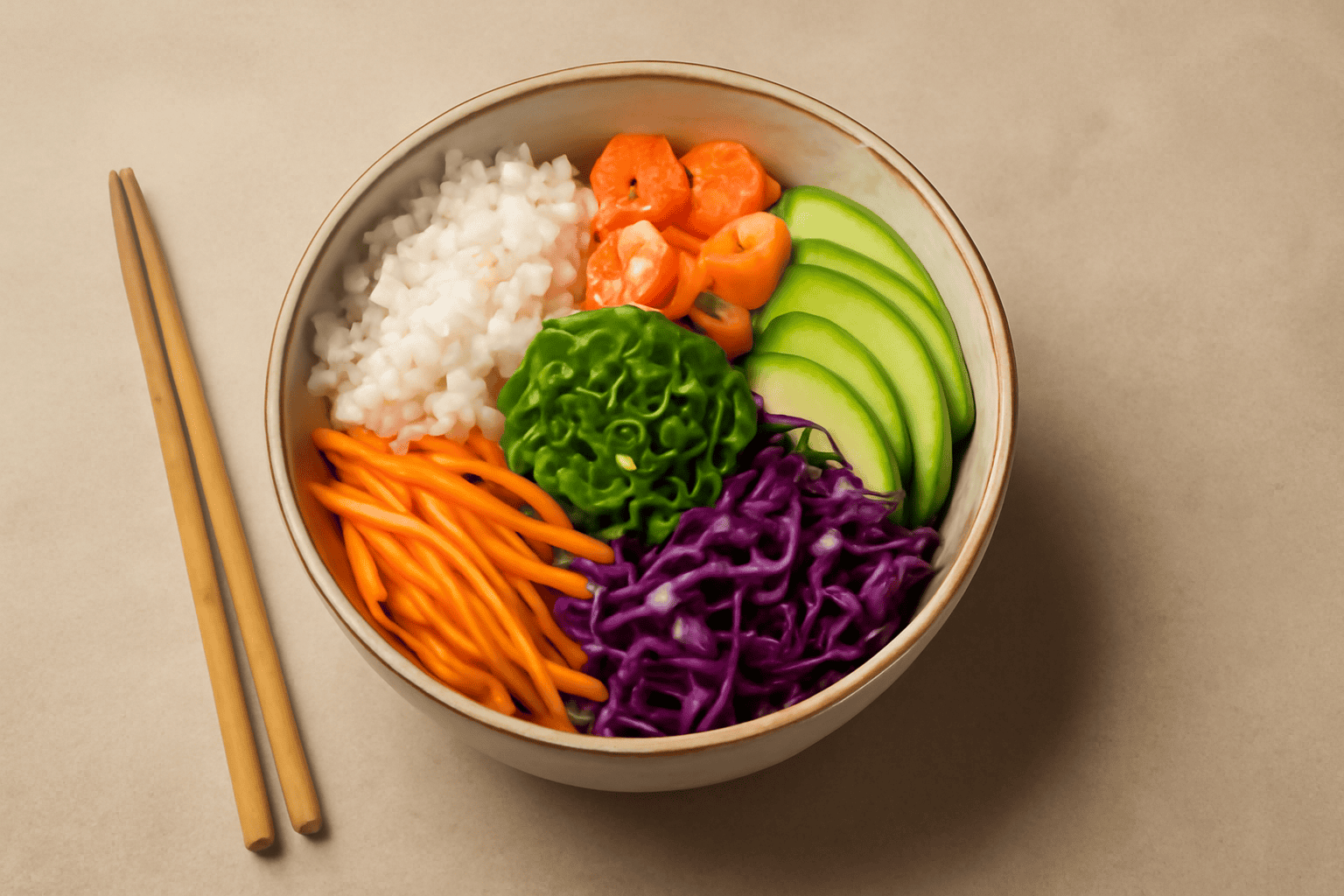
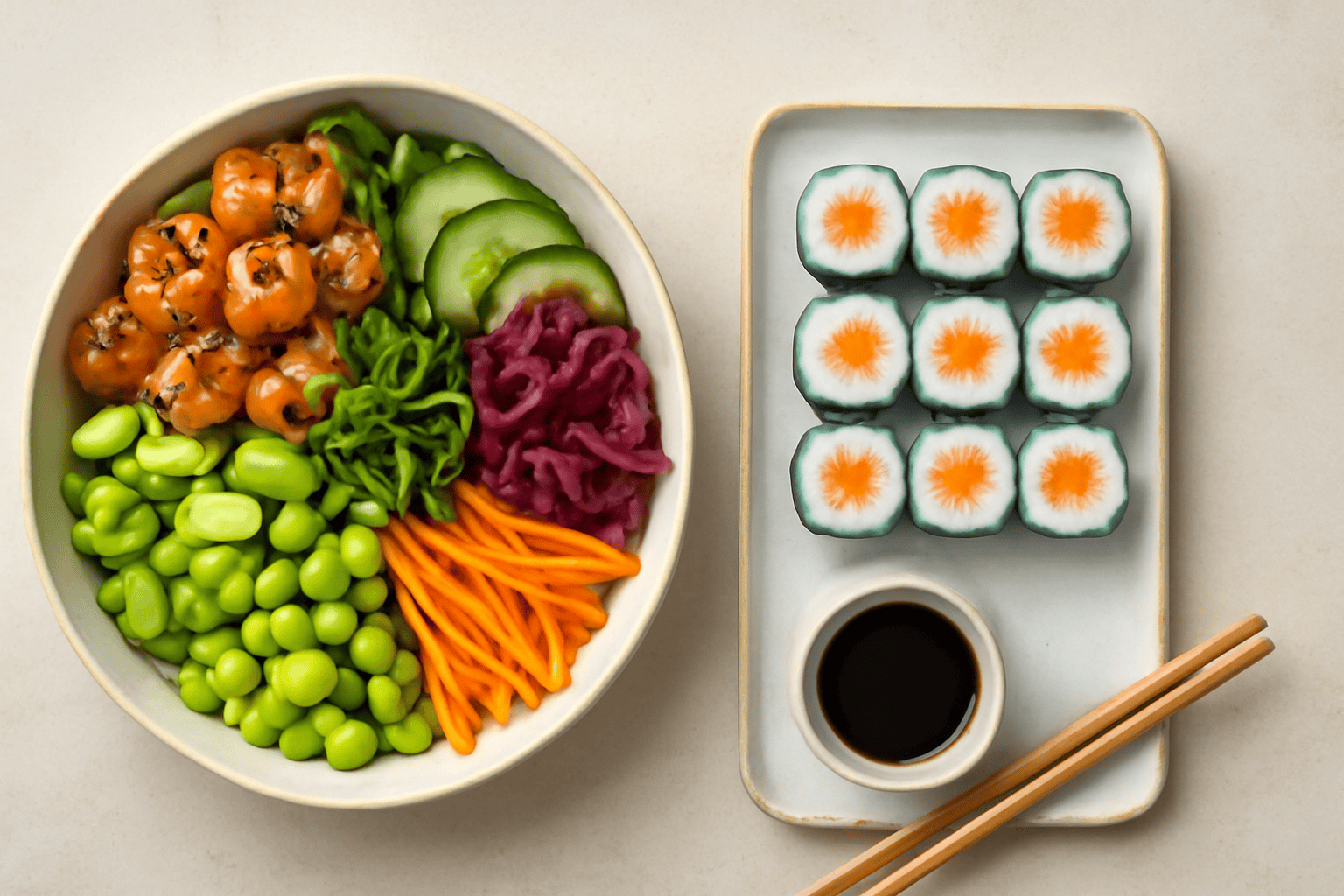
When it comes to poke bowl vs salad, the difference is not only in the appearance of the dish. What changes are mainly the structure, the level of customization, and the way the different ingredients coexist in the same meal. At first glance, they may seem like two similar choices: both fresh, colorful, and versatile. In practice, however, they often respond to different needs.

Understanding whether to choose poke or salad depends on the time of day, hunger, personal tastes, and how much you want to build a simpler or more complete dish. In this guide, we look at the main salad poke differences, with a clear and concrete comparison.

If you want to get a broader idea of the available combinations, you can take a look at Menu.

Poke bowl vs salad comparison: satiety, structure, and variety

The most obvious distinction between a classic salad and a poke bowl concerns the composition of the dish. The salad, in its most traditional version, often revolves around a base of leafy greens, vegetables, and a few additional ingredients. The poke bowl, on the other hand, is born as a more constructed dish, where each element has a precise role.

In a bowl, in fact, there are usually multiple layers: a base, a protein source, vegetables, toppings, and dressings. This makes the whole richer in terms of taste and more complex in texture. The salad tends to be more essential, especially when chosen as a quick dish or a reinforced side.

From a practical point of view, the poke bowl can be more suitable when you are looking for a meal with:

  • greater variety of ingredients in the same dish;
  • more contrasts of textures, between soft, crunchy, and fresh elements;
  • a more complete structure, designed as a single dish;
  • more customization options without sacrificing overall balance.

The salad remains a very appreciated choice for its immediacy. It is light in perception, simple to visually read, and often perfect when you want something fresh and straightforward. But in the comparison poke bowl vs salad, the bowl tends to offer a broader and more flexible construction.

When a bowl is more structured than a simple salad

Ci sono momenti in cui la differenza tra le due opzioni diventa particolarmente chiara. Se stai cercando un pranzo o una cena che vada oltre il concetto di verdure condite, la bowl può essere una scelta più strutturata proprio perché unisce più componenti in modo ordinato.

Una poke, infatti, non è solo “un’insalata con più ingredienti”. È un piatto pensato per combinare sapori diversi in modo armonico, lasciando spazio alla personalizzazione. La presenza di una base più corposa, insieme ad altri elementi selezionati, cambia la percezione complessiva del pasto.

Questo aspetto si nota soprattutto quando:

  • hai bisogno di un piatto che accompagni meglio la pausa pranzo;
  • vuoi evitare una scelta troppo minimale;
  • cerchi un mix di ingredienti che renda ogni boccone diverso;
  • preferisci costruire il tuo pasto in modo più preciso.

In altre parole, se ti chiedi poke or salad, la risposta dipende spesso da quanto vuoi che il piatto sia essenziale oppure completo. La bowl tende a essere più “centrale” nel pasto, mentre l’insalata può restare più lineare, soprattutto nelle versioni meno elaborate.

Per approfondire il tema da un’altra prospettiva, puoi leggere anche Relatedtitle:Poke salad.

Insalata poke differenze: personalizzazione e praticità nella vita di tutti i giorni

Uno dei punti più interessanti nel confronto riguarda la customisation. L’insalata può essere personalizzata, certo, ma spesso parte da uno schema abbastanza riconoscibile. La poke bowl, invece, nasce proprio intorno all’idea di comporre il piatto secondo gusti, abitudini e occasioni diverse.

Questo la rende molto pratica nella quotidianità. Chi ama variare può scegliere combinazioni sempre nuove, giocando con basi, ingredienti freschi, topping e salse. Chi preferisce restare su sapori più semplici può comunque costruire una bowl essenziale, ma senza perdere la sensazione di un piatto pensato nel dettaglio.

Tra le principali salad poke differences sul piano pratico ci sono:

  • ordine nella composizione: la bowl ha una struttura più definita;
  • flessibilità: è facile adattarla a gusti diversi;
  • esperienza di consumo: spesso ogni ingrediente mantiene meglio la propria identità;
  • versatility: può adattarsi a pause veloci o a momenti in cui vuoi qualcosa di più appagante.

Anche l’occhio vuole la sua parte. Una bowl ben composta comunica varietà in modo immediato, mentre l’insalata punta spesso su freschezza e semplicità. Nessuna delle due è “migliore” in assoluto: cambia il tipo di esperienza che vuoi avere a tavola.

Come rendere entrambe le opzioni più equilibrate

Whether you prefer a bowl or a salad, the difference always lies in the combinations. A well-constructed dish does not depend on a single category of ingredients, but on how the elements complement each other.

To make both options more balanced, it can be helpful to consider some aspects:

  • vary the textures, to avoid a monotonous result;
  • combine fresh ingredients and more structured components;
  • measure the seasoning, so as not to overpower the other flavors;
  • choose a coherent composition, without adding elements just for quantity.

In the case of salad, the key point is often to enrich it without changing its nature. In the case of the bowl, it is important to maintain harmony among the various layers of the dish. The goal is not to add everything, but to build a pleasant combination, easy to enjoy and suitable for the moment.

If you like to experiment at home too, in the section Recipes you can find useful ideas to play creatively with ingredients and combinations.

Choosing between poke or salad based on the occasion

The choice between poke or salad also varies greatly depending on the context. There is no single answer, because every occasion has its ideal dish.

For example, a salad can be perfect when you want something immediate, fresh, and without too many steps. A bowl can work better when you want a more constructed meal, with a feeling of greater completeness and more room for customization.

It can be helpful to orient yourself like this:

  • salad, if you are looking for simplicity and speed;
  • poke bowl, if you want a more complex dish;
  • salad, if you prefer an essential composition;
  • poke bowl, if you love combining different ingredients in the same meal.

In the end, the real point is not to determine a winner in the comparison poke bowl vs salad, but to understand which of the two options best suits what you want at that moment. Sometimes the visual lightness of a salad wins, other times the variety of a custom-made bowl.

If you want to explore different combinations and understand which style comes closest to your tastes, the easiest way is to start from the Menu and let yourself be inspired by the possible compositions.


FAQ

What is the main difference between poke bowl and salad?

The main difference lies in the structure of the dish. Salad is often more essential and mainly based on vegetables and a few additional ingredients, while the poke bowl is generally more complex, with a multi-layer composition that includes base, fresh ingredients, toppings, and dressing.

Poke or salad: which to choose for lunch?

It depends on how simple or structured you want the meal to be. If you are looking for something fresh and quick, the salad can be a good choice. If instead you prefer a more complete and customizable dish, the poke bowl may better suit the lunch break.

Is the poke bowl always more complete than a salad?

Not always, but it often has a broader structure. Much depends on how the two dishes are composed. A rich salad can be well constructed, just as a bowl can remain simple. The difference lies mainly in the dish's setup and the variety of chosen elements.

How to make a salad or bowl more balanced?

It can help to combine different ingredients thoughtfully, vary textures, and use the dressing in a balanced way. More than adding many elements, it matters to create a coherent whole, pleasant to taste and suitable for the occasion.

When it comes to poke bowl calories, the most correct answer is simple: it depends on how the bowl is composed. There is no single valid number for all, because the count changes based on the base, protein, toppings, and dressing. A bowl with essential ingredients and well-balanced portions will have a different intake compared to a richer version, with more sauces or creamy additions.

For this reason, if you are wondering how many poke calories, there are, the best way is to look at the composition as a whole. The poke was born as a versatile dish: fresh, colorful, customizable, and suitable for different tastes. It is precisely this freedom that makes it useful to understand which elements have the most impact on the final result.

If you want to get an idea of the available combinations, you can take a look at the Menu and check the product sheet for the details of the bowl you are interested in.

Poke bowl calories: what really determines the total

The total calorie count of a poke bowl does not depend on a single ingredient, but on the’balance between all the elements. Even a bowl that looks light can become richer if it includes many additions, while a simple composition can remain more straightforward while maintaining taste and variety.

The main factors that influence the poke bowl nutritional values are:

  • The base, such as rice, plant-based alternatives, or fresher mixes
  • The protein, which varies in texture and intensity
  • The toppings, from crunchy ingredients to softer and creamier ones
  • The sauces, often decisive in changing the overall profile of the bowl

The point is not to classify a poke as “right” or “wrong,” but to understand that every choice adds something: flavor, texture, and also a different impact on the total of the bowl.

Base, protein, topping and sauces: what changes the calorie count

The base of the bowl

The base is the first element to consider. Generally, a more abundant base makes the bowl more substantial, while a fresher or mixed choice can lighten the perception of the dish. Rice remains one of the most loved options because it gives structure and makes the bowl complete, but quantities also make a difference.

If your goal is to better understand the poke calories, starting from the base is useful: it is the foundation on which everything else is built.

The choice of protein

Protein gives identity to the bowl. Tuna, for example, is often chosen by those looking for a strong but fresh taste, while other options can offer a more delicate or more intense sensation. Here too, it’s not just the ingredient itself that matters, but how it fits into the overall mix.

A bowl with tuna and avocado, for example, can be creamy and satisfying without needing too many additions. It is a very popular combination precisely because it naturally combines different textures.

Toppings: small ingredients, big difference

Toppings may seem like details, but they have a big impact. Fresh vegetables, crunchy ingredients, softer elements or those with a full flavor change both the taste and the total of the bowl. When many additions are combined, the result becomes richer.

For this reason, observing the toppings is essential when evaluating the poke bowl nutritional values: often they shift the final balance more than you might think.

The role of sauces

Sauces are the element that can really transform the bowl. A light amount accompanies the ingredients, while a more generous presence makes the result more enveloping and intense. Creamy versions, in particular, can significantly affect the overall profile.

If you love a creamy tuna and avocado poke bowl, the solution is not to give up on taste, but to dose the dressing well and balance it with fresh and simple ingredients.

Examples of lighter, balanced and richer bowls

To better orient yourself, it can be useful to think in terms of composition styles. No rigid numbers are needed: just understand how the bowl changes based on the choices.

A lighter bowl

A lighter composition usually focuses on:

  • essential base or fresher mix
  • a leading protein
  • few well-chosen toppings
  • dressing used in balance

The result is a bowl with a clean taste, fresh and easy to include at different times of the day.

A balanced bowl

The balanced version is often the most versatile. It combines a complete base, a well-defined protein, toppings that add color and texture, and a sauce that is present but not dominant. It is the ideal solution for those looking for variety without making the composition too heavy.

In this case, talking about poke bowl calories means looking at the harmony of the dish: not only at what it contains, but how the ingredients balance each other.

A richer and creamier bowl

The richer bowls are those that focus on enveloping textures, numerous toppings, and more present dressings. A combination like tuna and avocado goes exactly in this direction: fresh, soft, tasty, with a creaminess that makes every bite fuller.

It is not a choice to avoid, it is simply a bowl with a different character. If you want to enjoy a composition like this, you can balance the rest by choosing essential additions and maintaining an orderly structure.

How to customize the bowl without losing taste

The beauty of poke is that you can build it according to your tastes. However, customizing does not mean adding everything. Often the most successful bowls are those in which every ingredient has a precise role.

Here are some practical ideas:

  • Choose a main element, like tuna or avocado, and build the rest around it
  • Avoid too many similar components, especially if all very creamy
  • Balance textures, alternating soft parts and crunchy notes
  • Use the sauce as a finishing touch, not as a dominant covering
  • Prefer clear combinations, easy to read even on the palate

If you like to create a custom bowl, it may be useful to also read Create Your Poke Perfect Bowl Ingredients And Tips, a practical guide to find the mix best suited to your style.

Another useful insight is to observe how the perception of the dish changes when you reduce excesses. A creamy bowl does not need to be heavy to be satisfying: often it is enough to work with a few well-matched ingredients.

Poke bowl nutritional values: how to read them simply

When you look for information on poke bowl nutritional values, the best approach is to read them practically, without overcomplicating things. Instead of stopping at a single data point, consider the overall profile of the bowl.

Ask yourself:

  • is the base abundant or more contained?
  • is the protein the center of the dish or accompanied by many additions?
  • are there creamy ingredients in multiple parts of the bowl?
  • does the sauce complete or cover everything else?

These questions help to better understand even the poke calories realistically. There is no need to turn the choice into a complicated calculation: just be clear that each element contributes to the final result.

If you love preparing bowls at home and want to get inspiration from simple and tasty combinations, you can explore the section Recipes.

A conscious choice, without giving up pleasure

Understanding how many poke bowl calories does not mean making the meal less spontaneous. On the contrary, it helps to choose more consciously the combination that feels most suitable for you at that moment: fresher, more balanced, or creamier.

A creamy tuna and avocado poke bowl can be a flavorful choice, especially when the ingredients are well measured and work together. The secret lies entirely in balance: a suitable base, selected toppings, and a sauce that enhances without covering.

If you want to compose your bowl simply and personally, you can visit Order Now and check the available information in the product sheet before choosing.


FAQ

How many calories does a poke bowl have?

There is no single value for all poke bowls. The calories depend on the composition: base, protein, toppings, and sauces can greatly change the final result.

What affects poke calories the most?

Usually, the main factors are the amount of base, the number of toppings chosen, and the type of sauce. The creamier versions or those very rich in additions tend to be more substantial.

Is a poke bowl with tuna and avocado always light?

Not necessarily. Tuna and avocado can create a balanced and tasty bowl, but the result also depends on the base, quantity, toppings, and dressing chosen.

How can I customize a poke bowl without overdoing it?

You can start with a main ingredient, add a few well-matched toppings, and use the sauce with balance. Often the most successful bowls are the simple and well-constructed ones.

When it comes to poke bowl vs sushi, the comparison arises spontaneously: both evoke the world of raw fish, Asian cuisine, and a practical yet flavorful meal. Yet they are not the same thing. The format changes, the dining experience changes, and also the way you can compose your dish.

Understanding the difference between poke and sushi is especially useful if you want to choose based on the moment: a quick lunch break, a more traditional dinner, a craving for something fresh, or a desire for a freer mix of ingredients. In this guide, we look at the main differences simply, without absolutes, to better understand when to opt for a bowl and when for sushi.

Poke bowl vs sushi: differences in format, ingredients, and customization

The first real difference between poke and sushi is immediately noticeable: the shape of the dish. The poke bowl is a complete bowl, designed as a single dish, where base, proteins, vegetables, and toppings coexist in the same mix. Sushi, on the other hand, consists of separate pieces, often served in portions to share or combine with each other.

This distinction also greatly changes the way it is eaten. The bowl has a more immediate, informal, and customizable approach. Sushi follows a more precise logic, with different preparations that enhance specific textures and contrasts.

Dish format: complete bowl or tasting in pieces

If you wonder poke or sushi, start here:

  • Poke bowl: it is eaten in a single bowl, often with a base like rice or similar alternatives, to which proteins, vegetables, sauces, and toppings are added.
  • Sushi: is presented in distinct pieces, with preparations that can vary in shape, size, and combination of ingredients.

The bowl is often chosen by those looking for a practical and customizable meal. Sushi, instead, may be preferred by those who enjoy a more paced tasting, bite by bite.

Ingredients: common points and real differences

It is true that poke and sushi share some ingredients, such as rice and fish, but the final result is different. In the poke bowl, the whole is freer and more contemporary: alongside the main ingredients, fresh, crunchy, and creamy elements find space, making each bowl different.

In sushi, instead, the construction is generally more essential and focused on the balance of the single piece. The raw material remains central, but with a more codified composition.

In summary, the difference between poke and sushi is not only about what is on the plate, but how the ingredients are conceived and combined.

Customization: the bowl wins in freedom

One of the aspects that makes poke so loved is the possibility to build it almost tailor-made. Base, protein, vegetables, toppings, and sauce allow you to create a mix closer to your current tastes.

Sushi, while offering variety, has a less customizable structure in a single order. Usually, you choose from predefined combinations, focusing more on the selection of pieces than on free composition.

If you love deciding every element of your dish, the bowl can be more intuitive. If instead you prefer to rely on a more classic and straightforward proposal, sushi might be the right choice.

General nutritional differences without absolutes

When comparing poke bowl vs sushi, people often wonder which is “lighter” or “more balanced.” In reality, there is no single answer. It all depends on ingredients, quantities, dressings, and combinations.

A poke bowl can be very simple or richer, depending on how it is composed. The same goes for sushi: there are simpler options and more elaborate ones, with differences related to rice, sauces, and additional ingredients.

For this reason, it is better to think in terms of overall composition, without turning the comparison into a rigid ranking.

Calories: depend on composition, not just the dish name

The topic calories must be approached realistically. It is not enough to say “poke” or “sushi” to understand how rich a meal is. Several factors influence this:

  • the amount of rice or the chosen base;
  • the type of protein;
  • the presence of creamier or crunchier ingredients;
  • the use of sauces and toppings;
  • the total number of pieces or the size of the bowl.

In practice, both poke and sushi can be simpler or more abundant. If you have doubts about ingredients or composition, check the product sheet.

Satiety and practicality change the experience

Another important element is the perception of the meal. The poke bowl, being served as a single dish, can give the idea of a more complete and immediate meal. Sushi, on the other hand, often lends itself to a more gradual enjoyment, perhaps shared or built with multiple courses.

It’s not just a matter of quantity, but of pace. Some prefer a bowl to enjoy simply and directly, while others appreciate sushi because it turns the meal into a slower and more varied experience.

When to choose poke or sushi based on the moment

If in doubt poke or sushi, the best choice often depends on the context. There is no option that is always better than the other: there are situations where a bowl can be more convenient and others where sushi may better suit the occasion.

When the poke bowl can make more sense

The poke bowl is often a good idea when you are looking for:

  • a practical meal that is easy to manage;
  • more freedom of choice among ingredients and combinations;
  • a single dish with different elements in the same bowl;
  • a fresh and informal experience, suitable for different times of the day.

It is a versatile solution, especially if you like to often change combinations or find a different balance each time between taste, textures, and ingredients.

When sushi can be the right choice

Sushi can make more sense if you want:

  • a more traditional format;
  • a tasting in pieces, to choose and combine;
  • a more ritualistic experience and less “mixed”;
  • a dinner to share with a variety of tastings.

Those who love the detail of each bite, the presentation, and the variety of preparations often continue to prefer sushi precisely for this approach.

Difference between poke and sushi: which suits your style better

More than asking yourself which one is absolutely better, it can be useful to ask yourself what kind of experience you want to live.. The poke bowl speaks a contemporary language, simple, colorful, and customizable. Sushi remains an iconic choice, more structured and tied to the variety of individual pieces.

If you like to compose, mix, and find your personal balance, the bowl may be closer to your style. If instead you prefer a predefined selection and a more orderly tasting, sushi might convince you more.

For those who love to explore similar alternatives with a casual and tasty spirit, it can also be interesting to read Tacos Or Poke Bowl What To Choose, another useful comparison to understand how to choose based on the moment and preferences.

Useful ideas to guide you between bowls, sushi, and pairings

If you want to better understand which combinations best match your tastes, you can take a look at the Menu to get an idea of the style of the offerings and the type of experience a bowl can offer. And if you love discovering new ideas to bring home as well, in the section Recipes you will find inspirations related to ingredients, pairings, and fresh, contemporary moods.

If you are undecided between sushi and bowl, the simplest way to understand what suits you is to start from an offering that highlights variety, freshness, and customization. To better explore the combinations and find the one most suitable for your moment, you can visit the Menu.


FAQ

What is the main difference between poke bowl and sushi?

The main difference is in the format: the poke bowl is a single dish in a bowl, while sushi consists of separate pieces. The level of customization and the way the ingredients are combined also differ.

Between poke and sushi, which has fewer calories?

There is no absolute correct answer. The calories depend on the composition of the dish, the quantities, the sauces, and the chosen ingredients. For specific details, check the product sheet.

When is it better to choose a poke bowl instead of sushi?

The poke bowl may be more suitable when you are looking for a practical, customizable, and complete meal in a single bowl. Sushi may be preferable if you want a tasting in pieces or a more traditional experience.

Do Poke and sushi have the same ingredients?

They share some elements, such as rice and fish, but they are not the same. The poke bowl has a freer structure and is rich in combinations, while sushi follows more defined preparations focused on the single piece.

Home Icon Home Menu Icon Menu Order Now Icon Order now Register Icon Register