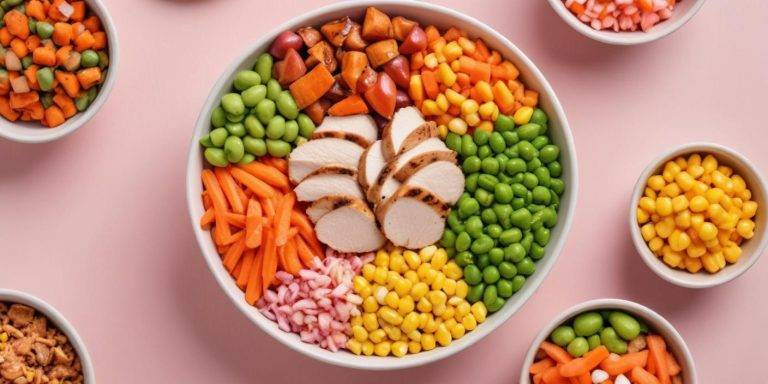
Nutritional values of a poke bowl: proteins, carbohydrates, fats, and fibers

Understanding the nutritional values of a poke bowl is useful when you want to compose a meal more consciously, without giving up taste. Poke, in fact, is a dish that is easy to read: it starts with a base, adds a protein source, includes fresh ingredients, and is completed with toppings and dressings. This very structure makes it easier to navigate between proteins, carbohydrates, fats, and fibers.

There is no single answer valid for everyone, because the nutritional values of poke bowls change based on the chosen ingredients and quantities. However, there are practical criteria that help to understand if a bowl is more balanced, lighter, or richer. If you want to explore ideas and combinations, you can also take a look at the Menu to see how the composition of this dish can vary.

Guideline table of macros for a basic poke bowl

When it comes to poke bowl nutritional values, it is best to start with a simple scheme. A basic bowl, without going into too much technical detail, can be understood as follows:

  • Carbohydrates: mainly come from the base, such as rice or similar alternatives.
  • Protein: depend on the chosen source and greatly affect the perception of meal completeness.
  • Fats: can come from naturally richer ingredients or from toppings and sauces.
  • Fibres: increase with vegetables, fruit, seeds, and plant-based ingredients.

In general, a bowl built with a base, a protein, more plant-based ingredients, and a well-measured dressing tends to have a more harmonious distribution of macros. This is why poke is often perceived as a versatile dish: you can make it more essential or richer simply by changing a few elements.

A practical way to interpret the bowl is to think about the composition of the dish as a whole:

  • the base mainly affects the overall energy;
  • the protein contributes to the structure of the meal;
  • the vegetables help to give volume and variety;
  • i topping can significantly shift the nutritional profile;
  • the sauces they often make more of a difference than you might think.

For this reason, when evaluating nutritional values, it is not enough to stop at the name of the dish: it always matters how it was composed.

How the nutritional values of poke bowls change with different bases and proteins

The most interesting part of the poke is that every choice modifies the final balance. The nutritional values of poke bowls can change a lot starting from the base.

The role of the base in carbohydrates

If you choose a more present base, the weight of the carbohydrates will naturally be greater. This does not mean that the bowl is less balanced: it depends on the context and how you pair the rest. A well-proportioned base can coexist perfectly with proteins, fibers, and fats in a balanced way.

If instead you prefer a lighter composition, you can lean towards a greater presence of plant-based ingredients, thus reducing the impact of the starchy part and increasing the feeling of freshness.

How the protein source affects it

Protein is one of the elements that most defines the profile of the bowl. Some options make the dish more straightforward, others richer or more intense in flavor. In practical terms:

  • a more essential protein source tends to leave space for the other ingredients;
  • a tastier or more structured choice can also increase the fat content;
  • the pairing with toppings and sauce can greatly amplify the final result.

If your goal is to build a macro balanced poke, the most useful thing is to observe the relationship between base and protein, not the individual isolated ingredients. A well-thought-out bowl works when no element takes over too much.

Toppings and dressings: the details that change everything

Often the focus is on the base and protein, but it is the final details that really shift the nutritional profile. Seeds, crunchy ingredients, creamy elements, and sauces can increase the amount of fats or make the bowl richer and more satisfying. At the same time, vegetables and additional plant-based ingredients can raise the fibres and improve the variety of the dish.

The simplest advice is this: if you really want to understand your bowl, always consider the whole. An apparently light composition can become more intense with toppings; a richer bowl can remain balanced if built carefully.

Lighter, more protein-rich, or more filling combinations

One of the advantages of poke is customization. Depending on how you compose it, you can achieve a different result even while staying within the same format.

For a bowl with a lighter profile

If you are looking for a fresher and simpler bowl, it generally works well:

  • a moderate base;
  • a good presence of plant-based ingredients;
  • a well-integrated protein;
  • seasonings used in balance.

This approach helps keep the dish smooth, without making it too heavy. To get inspiration on how to combine the ingredients, you can also read Create Your Poke Perfect Bowl Ingredients And Tips.

For a more protein-rich bowl

When you want to give more space to proteins, the key point is not to unbalance the rest. A more protein-rich bowl works better if it still maintains a consistent base, fresh ingredients, and toppings that are not too overpowering. This way the dish remains pleasant to eat and does not lose variety.

The feeling of balance matters a lot: a bowl should not only be “rich” in something, but well constructed overall.

For a more filling bowl

Perceived satiety does not depend on a single factor. It usually increases when the bowl contains:

  • carbohydrates well present but not excessive;
  • proteins in an adequate amount;
  • fibres from various plant-based ingredients;
  • a small component of fats that gives roundness to the taste.

It is precisely this mix that makes poke a flexible dish: you can adapt it to the time of day, your hunger level, and the style of meal you prefer.

How to read the values usefully without extremes

Talking about poke bowl nutritional values does not mean turning the meal into a continuous calculation. The most useful idea is to use macros as a compass, not as a rigid constraint.

A simple way to read a bowl is to ask yourself these questions:

  • is the base proportionate to the rest?
  • is there a well-defined protein source?
  • are there plant-based ingredients in interesting quantities?
  • do toppings and sauces complement or overload?

If the answer is yes, it is likely that you have a well-constructed bowl in front of you. In many cases, the concept of macro balanced poke coincides exactly with this: a dish where the different elements coexist naturally, without unnecessary excesses.

It is also worth remembering that values can vary depending on the recipe and actual composition. If you want a more precise reference on a specific combination, check the product sheet when available. For those who love to experiment at home as well, the section Recipes can be a good source of inspiration to better understand the balance between ingredients.

In the end, reading nutritional values usefully mainly means understanding how one ingredient interacts with others. Poke is also liked for this: it is immediate, colorful, customizable, and easy to adapt to your tastes with a simple approach.

If you want to learn more about how to build a bowl in an even more conscious way, the best starting point is Create Your Poke Perfect Bowl Ingredients And Tips: you will find practical tips to combine ingredients, textures, and flavors with more balance and personality.


FAQ

Is a poke bowl always balanced in terms of macros?

Not always. It depends on how it is composed: base, protein, plant-based ingredients, toppings, and sauce influence the balance between carbohydrates, proteins, fats, and fibers.

Which ingredients have the greatest impact on the nutritional values of a poke bowl?

They usually affect mainly the base and the protein source, but toppings and dressings can also greatly change the final profile of the bowl.

How can I get a macro-balanced poke?

Generally, it is advisable to combine a proportional base, a well-defined protein, a good presence of plant ingredients, and seasonings balanced in dosage.

What do the fibers in a poke bowl depend on?

Fibers increase especially with the presence of vegetables, plant ingredients, fruit, and seeds. The more varied the composition, the more the bowl tends to be complete also in this aspect.

When it comes to healthy fast food, the comparison between poke bowl and traditional fast food comes almost immediately. It is a natural comparison: both respond to a very concrete need, that of eating quickly without complicating the day. But between the two formats there are obvious differences in the way the meal is built, in the possibility of choosing the ingredients and in the final feeling they leave.

Talking about poke vs fast food does not mean turning one option into the “good” and the other into the “bad.” Often practicality matters most, and every choice can have its place. The real difference often lies in the composition of the dish: on one side a more customizable format, on the other a generally more standardized proposal. For those looking for a quick healthy lunch, understanding these differences can help to decide better, without giving up taste.

Poke vs fast food: comparison between two different ways of eating fast

Traditional fast food is designed to be immediate, recognizable and consistent. You choose in a few seconds, receive it quickly and already know more or less what to expect. It is a convenient format, especially when you have little time and want to play it safe.

Poke, on the other hand, offers an idea of a quick meal built differently. The base remains the same: simplicity, speed and practicality. But the experience changes. In a bowl, in fact, the customer can combine several elements and create a solution closer to their tastes at the moment.

In the comparison poke vs fast food, therefore, the most interesting distinction is not only “what you eat”, but how the meal is composed. This aspect makes the difference especially for those who, during lunch break or between commitments, want something quick but not necessarily standard.

  • Traditional fast food: often a more defined and less modifiable choice.
  • Poke bowl: a more flexible structure, with ingredients combinable according to preferences.
  • Both: respond to the need to eat in a short time.

In practice, it is not about establishing an absolute winner, but understanding which format best suits the moment and the type of experience sought.

Quick healthy food: differences between customization, ingredients and feeling of lightness

Those who look for healthy fast food often do not just want to eat quickly: they also want to have a perception of greater balance on the plate. Here poke stands out for three very clear elements: customization, variety and visible composition.

Customization really changes the experience

One of the most appreciated aspects of poke is the possibility to build the bowl starting from a base and adding different ingredients, according to one’s tastes. This makes the meal less rigid and more suitable for daily needs that can change: one day you want something fresher, another something richer, yet another you prefer to stick to simple combinations.

In traditional fast food, however, customization is often more limited. The menu is built around predefined combinations, designed to be repeatable and immediate. It is convenient, but leaves less room for truly tailored choices.

Visible ingredients and freer combinations

Another important point concerns the visibility of ingredients. In a poke bowl, what you choose is immediately visible: base, toppings, sauce, and different textures coexist in the same dish clearly. This helps many people perceive the meal as closer to their tastes and easier to manage.

Traditional fast food instead focuses on a more compact and uniform structure. It is a practical format, but often less readable in its overall composition. For some, this is an advantage, for others, not.

Lightness as perception, not as a promise

When talking about quick healthy lunch, the feeling of lightness is often mentioned. It is important to understand it correctly: not as an absolute claim, but as a subjective perception related to the type of ingredients chosen, quantities, and the construction of the dish.

A well-composed bowl can be perceived as fresher and lighter compared to a traditional fast food meal, especially when essential and balanced flavor combinations are preferred. At the same time, even in poke, the final choice matters a lot: sauces, extras, and richer mixes can change the overall experience.

For this reason, the real advantage is not a generic promise, but the possibility to decide more freely what to put in your meal.

When poke can be a more balanced choice during the day

There are moments when poke can be particularly suitable for those who want a practical and enjoyable alternative. This happens especially on busy days, when a quick but not monotonous meal is needed, or when looking for something that fits well between work, study, training, or leisure time.

Poke can be a more balanced choice when:

  • you want to better manage the composition of the dish;
  • you prefer to have more variety of textures and flavors;
  • you are looking for a quick but less standardized format;
  • you want a meal customizable also based on the time or appetite.

This does not mean that traditional fast food should be excluded outright. It simply means that poke offers a different flexibility. And this flexibility can make a difference when you want to choose with a bit more care, without wasting time.

For those who want to get a more concrete idea of the available options, it can be useful to take a look at Menu and check the options available on the product page.

Quick healthy lunch: how to order better when you have little time

When you're in a hurry, you tend to choose automatically. It's normal. But even in a few minutes, you can order more consciously, especially if the format allows you to customize the dish.

If the goal is a quick healthy lunch, the most useful advice is to start with simplicity. There's no need to complicate things: often a few well-matched elements are enough to achieve a satisfying and suitable result for the moment.

Here are some good practical habits:

  • Start with the base and choose according to your hunger and the context of the day.
  • Balance the contrasts between fresh ingredients, soft textures, and stronger notes.
  • Don't overdo the extras if you're looking for a meal with a more straightforward taste.
  • Consider the sauce carefully, because it can greatly change the final result.
  • Choose what truly tempts you: practicality works better when it also meets the pleasure of eating.

Another useful aspect is organization. If you already know what you prefer, ordering becomes even faster and the break really remains a break. In this sense, even a takeaway solution can help better manage your day's timing. If you want to learn more about this mode, you can read more on Take Away Poke 2.

Choosing between poke and fast food based on the moment, not out of habit

Often the difference is not just the menu, but the habit. You end up ordering the same thing because it's easier, not because it's really what you want at that moment. The comparison between poke vs fast food then becomes useful precisely for this: it helps to break the automatic behavior.

If you want a quick, customizable meal built according to your tastes, poke can be a practical and pleasant answer. If instead you want something immediate and already defined, traditional fast food remains a known and recognizable option. The best choice, in most cases, is the one that best fits the real context of your day.

The point is not to follow a strict rule, but to find a way of eating quickly that makes you feel comfortable, with taste and simplicity.

If you want to calmly choose a solution suitable for your pace and order in a few steps, you can visit Order Now and check the options available on the product page.


FAQ

Is poke always better than traditional fast food?

Not absolutely. It depends on the moment, personal tastes, and how the meal is composed. Poke generally offers more customization options, while traditional fast food focuses on more standard and immediate formulas.

Why is poke often chosen as a quick healthy lunch?

For many people, poke is a practical solution because it combines speed, variety, and freedom of choice. The ability to combine base, ingredients, and sauce helps create a meal closer to one's current preferences.

In the poke vs fast food comparison, what changes the most?

The main difference lies in the meal structure. Traditional fast food often offers predefined combinations, while poke allows for a more flexible and visible composition, with ingredients chosen more directly.

How to choose a healthy fast food when you have little time?

The easiest way is to aim for a clear and not excessive composition, choosing a few well-matched elements. Also, checking the menu in advance can help to order faster and with greater awareness.

When one asks oneself if poke is good for you, the most honest answer is: it depends on how it is made and how often you choose it. Poke, in itself, is not automatically “light” nor something to avoid. It is a dish that can be very varied and this very flexibility makes the difference: a bowl built with balance can be practical, fresh, and pleasant to include in your routine, while a combination too rich in dressings, extras, and large portions can significantly change the final result.

In recent years poke has become a symbol of a quick lunch break but also of a dynamic lifestyle, because it combines taste, color, and customization. However, many doubts circulate around this dish: some consider it always healthy, others think it is just a trend, and some wonder if poke makes you gain weight. In reality, as with many complete meals, what matters most is the combination of ingredients.

If you want to better understand how to navigate combinations and more conscious choices, it can be useful to also take a look at What Are The Benefits Of Eating Poke, to have an even broader overview.

Is poke good for you? Yes, if the bowl is built with balance

The strong point of poke is that it is not a rigid dish. It can include a base, a protein source, vegetables, toppings, and sauce: a simple structure, but very versatile. For this reason, it is difficult to give a valid answer for every bowl.

Saying that poke is always good would be an oversimplification. But also thinking it is a “wrong” meal regardless does not make much sense. A balanced bowl tends to have:

  • a well-measured base, without overdoing the quantities;
  • proteins chosen with care, according to your tastes and habits;
  • a good presence of vegetables, which add variety and freshness;
  • dressings used sparingly, so as not to weigh down the whole.

In other words, poke can be an interesting choice when looking for a complete and customizable meal. However, there is no universal formula: it's the composition of the bowl that makes the difference.

Poke benefits: what can make this dish an interesting choice

Talking about benefits poke does not mean attributing special effects or unrealistic promises to the dish. Rather, it means observing which characteristics make it appreciated by those looking for a practical, varied meal that is easy to adapt to their tastes.

Bases: the role of balance

The base is one of the elements that most affects the perception of the dish. Rice, lighter alternatives, or different mixes can change the texture and intensity of the bowl. The advantage is that the quantity can be adjusted according to the time of day and actual hunger, avoiding the “overfilled plate” effect.

A well-calibrated base helps to build a more harmonious meal, without turning the bowl into something excessively heavy. If you want to explore ideas and pairings in the kitchen, you can find inspiration in the section Recipes.

Proteins: variety and customization

Another appreciated aspect of poke is the possibility to choose from different protein sources. This freedom makes the dish suitable for different preferences and allows frequent changes in combination, avoiding monotony. Variety, in daily nutrition, is often an added value also from the dining experience point of view.

The beauty of poke is precisely this: it easily adapts. Some prefer milder flavors, some look for something stronger, some aim for a simple bowl, and others love contrasts. All this makes poke a simple but very flexible format.

Vegetables and toppings: color, texture, freshness

The presence of vegetables helps make the bowl more varied, both in taste and texture. Crunchy, fresh, or slightly more flavorful ingredients can balance the whole and make the meal less monotonous. The eye also wants its part: a well-composed bowl is often more inviting and satisfying.

Among the most cited poke benefits is precisely this combination of freshness, practicality, and customization. It is not a magic formula, but a simple way to build a meal that can be pleasant and well-organized.

Does poke make you gain weight? Myths to be downsized

One of the most common questions is: does poke make you gain weight? In reality, no single dish alone defines the overall balance of one’s habits. What always matters is the context: frequency, quantity, chosen ingredients, and general lifestyle.

Poke is often perceived as “light” regardless, but not all bowls are the same. Some combinations can be richer than imagined, especially when many extras are added or dressings are used abundantly. At the same time, demonizing poke just because it contains rice or sauces is another common mistake.

The most common myths are these:

  • “If it’s poke, then it’s always light”: not necessarily;
  • “If it contains carbohydrates, then it should be avoided”: it depends on quantity and overall composition;
  • “The more ingredients I put, the better”: not always, because the risk is losing balance;
  • “Sauces don’t matter much”: on the contrary, they can greatly affect the final result.

The truth lies in the middle: poke is neither a meal to idealize nor one to fear. It matters how you compose it.

Mistakes to avoid with sauces, extras, and portions

If the goal is to enjoy a bowl without making it too heavy, there are some recurring mistakes to keep in mind. These are details that seem secondary but can greatly change the balance of the dish.

Beware of too much sauce

Sauces add character, but when they become the main feature, they risk covering the flavors of the other ingredients. The simplest advice is to use them to complement, not to saturate. A well-made bowl doesn’t need to be “drowned” in dressing to be tasty.

Extras yes, but with discretion

Adding crunchy or tasty ingredients can make the poke even more interesting, but piling on too many extras often leads to a less harmonious result. It’s better to choose a few elements that make sense together, rather than turning the bowl into a confusing mix.

Portions: true balance starts here

Often the problem isn’t the ingredient itself, but the quantity. A well-thought-out portion helps keep the meal more balanced and enjoyable. Eating with pleasure doesn’t necessarily mean filling the bowl beyond what’s needed: even simplicity can be a smart choice.

How to compose a balanced bowl without giving up taste

Building a balanced bowl doesn’t mean making it dull or unsatisfying. On the contrary, poke works best when it manages to combine taste, variety, and a sensible composition.

A practical approach can be this:

  • start from a proportioned base;
  • choose a protein source in line with your tastes;
  • add more plant-based ingredients to give freshness and texture;
  • limit unnecessary extras, selecting only those that truly complete the bowl;
  • measure the sauce to enhance the dish without weighing it down.

This scheme is not a strict rule, but a good starting point to create a more balanced and enjoyable bowl to eat. Personalization remains the heart of poke: the important thing is to use it with a minimum of attention, without being guided only by the idea of “the more, the better.”.

To guide you through the different possibilities, you can also explore the Menu and understand how a bowl designed to combine simplicity, taste, and variety is created.

A versatile meal to choose with more awareness

Ultimately, if you are wondering if poke is healthy, the most sensible answer is that it can be a good choice when composed with balance. Its strengths are freshness, variety, and the possibility to personalize every element, but this very freedom requires a bit of attention to avoid unnecessary excesses.

If you want to get inspiration to build a bowl more consciously and find combinations suited to your tastes, the simplest way is to start from the Menu, so you can explore the different options with a clearer idea of what you are looking for.


FAQ

Is poke always good for you?

Not always the same way: it depends on the composition of the bowl, the quantities, and the frequency with which it is chosen. Base, proteins, vegetables, extras, and sauces all affect the final result.

Does poke make you gain weight?

You can't reduce everything to a single dish. A bowl very rich in sauces, extras, and large portions can be heavier, while a more balanced composition significantly changes the whole.

What are the most appreciated poke benefits?

Among the most appreciated aspects are the variety of ingredients, the possibility to customize the bowl, the presence of fresh elements, and the convenience of a complete meal that is easy to adapt to one's tastes.

How to make a poke bowl more balanced?

It can be useful to start with a well-measured base, choose a protein source, add more vegetables, and use sauces and extras in moderation. The idea is to create a tasty but not excessive bowl.

When it comes to gluten-free soy, the doubt almost always arises from a very common ingredient: soy sauce. The name might suggest a simple condiment made only of soy, but in reality, this is not always the case. For those following a gluten-free diet or paying attention to allergens, understanding the difference between traditional soy sauce and alternative variants is the first step to choosing with more confidence.

In the world of bowls, where ingredients, toppings, and sauces come together in ever-changing combinations, this topic becomes even more relevant. If you are wondering how to navigate between gluten-free soy sauce, similar alternatives and the possibility of composing a gluten-free soy poke, here you will find a clear and practical guide.

Gluten-free soy: why is it such a common doubt

The confusion is understandable: the soy bean itself does not automatically mean the presence of gluten. The problem often arises from derived products or preparations where soy is used together with other ingredients.

Among the most common examples are:

  • soy-based condiments;
  • sauces used for marinades or finishes;
  • ready mixes where additional ingredients may appear;
  • composite preparations where soy is only part of the recipe.

In practice, when a person looks for information about gluten-free soy, they are often not asking about the legume itself, but about everything surrounding its use in cooking. This is an important distinction, especially in contexts like poke bowls, tacos, and casual food, where customization is broad but every choice must be carefully checked.

Classic soy sauce and gluten-free soy sauce: what is the difference

The main difference lies in the recipe of the condiment. Classic soy sauce may include ingredients that make it unsuitable for those avoiding gluten. For this reason, just reading the word “soy” is not enough to take everything for granted.

When it comes to gluten-free soy sauce, this instead refers to versions formulated differently from the traditional one. The taste can remain close to the idea of savoriness and intensity that many associate with soy sauce, but the composition changes and must always be checked case by case.

Remember:

  • not all soy sauces are the same;
  • the presence of soy is not enough to define the absence of gluten;
  • even similar products can have different recipes;
  • verification must be done on the official product or dish sheet.

This is even more true when eating out, where choices are often based on taste or habit. If you love strong flavors and want to better understand how to navigate bowls, it may be helpful to also read RelatedTitle:Pokeglutenfree, to have a broader overview on the topic.

Gluten-free alternatives to soy sauce in general

Those looking for a soy-inspired flavor but want to avoid ingredients incompatible with their needs usually opt for gluten-free alternatives. However, there is no shortcut that always works: every sauce, dressing, or condiment can have different characteristics.

In general, alternatives can differ in:

  • a more delicate or more intense aromatic profile;
  • a more liquid or more enveloping consistency;
  • the presence of additional ingredients that alter the final taste;
  • use as a base, topping, or part of a marinade.

The key point is not to look for a “similar” name, but to understand how that preparation is really made. In a contemporary food experience like the poke bowl, where every detail changes the final result, the sauce is often the element that defines the character of the dish. For this reason, if you have specific needs, it is always better not to rely on assumptions.

Poke gluten-free soy: what to check before choosing

In the case of a gluten-free soy poke, the issue is not just about a single ingredient. The whole matters: base, proteins, toppings, sauces, and possible additions. Even when the dish seems simple, the presence of a single unsuitable element can make the difference.

Before ordering or composing a bowl, it is advisable to especially check:

  • the chosen sauce, because it is often the first critical point;
  • the ingredients combined in the same recipe;
  • the available variants at the time you compose the dish;
  • official allergen information.

This approach is useful not only for those looking for an alternative sauce but also for those who simply want to navigate the current options more consciously. In a rich and customizable menu, the advantage is precisely being able to build your own experience closer to your tastes and needs.

To explore the available offer and better understand how to navigate combinations, ingredients, and dressings, you can take a look at the Menu.

Because in poke bowls the official sheet must always be checked

In the poke context, relying solely on the name of an ingredient is not enough. A bowl can contain different components, and the same goes for a sauce that, at first glance, seems straightforward to interpret. That is why checking the official sheet is always the most correct choice.

Checking official information is useful because it allows you to:

  • avoid interpretations based only on the product name;
  • consider the dish in its complete composition;
  • have a clear and updated reference;
  • choose more confidently based on your needs.

If you have doubts about ingredients, sauces, or combinations, the best reference remains the OfficialAllergenTable. In case of changes or updates, always check the product sheet.

How to navigate taste, variety, and allergen awareness

One of the most interesting things about poke bowls is the possibility to create a personal, fresh, and balanced mix in taste. However, this freedom makes it even more important to carefully read the available information when it comes to allergens.

The simplest advice is this: start with the ingredients you know best, then check the dressings and finally verify the complete combination. Soy can appear in different forms, and not everything that refers to soy automatically corresponds to a choice suitable for those avoiding gluten.

A practical approach can be:

  • choose the base and main ingredients;
  • pay particular attention to sauces;
  • check the allergen table before the final choice;
  • if in doubt, verify in the product sheet.

This way the experience remains simple, tasty, and more conscious, without giving up the variety that makes a bowl so versatile.

If you want to quickly check the most useful information about ingredients and seasonings, the most practical step is to consult the official allergen table: it is the best reference to guide you through soy, sauces, and possible combinations with greater clarity.


FAQ

Is soy always gluten-free?

You should not give an automatic answer. The doubt often concerns soy-based products or composite preparations, not just the ingredient itself. For this reason, it is always advisable to check the official sheet.

Does soy sauce always contain gluten?

Not all soy sauces are the same. There are traditional versions and alternative ones formulated differently. If you have specific needs, always check the official product information.

How to understand if a poke bowl with soy is suitable for my needs?

It is important to check the entire composition of the dish: base, toppings, seasonings, and sauces. The most useful reference remains the official allergen table, along with the product sheet if available.

Is avoiding soy sauce enough to choose a gluten-free poke?

Not always. Other ingredients or seasonings can also affect the final choice. It is better to check the complete dish and not rely on just a single element.

When it comes to gluten-free poke, the key word is just one: attention. The poke bowl is a versatile and customizable dish, but precisely for this reason it is important to carefully check every chosen ingredient. Not all the elements present in a bowl are automatically suitable for those looking for a gluten-free option, especially when sauces, toppings, and possible cross-contaminations come into play. For this reason, before ordering, the most useful advice is always to consult the Official allergen table reference and check the updated information in the product sheet.

The good news is that a gluten-free poke bowl can be built simply and deliciously, starting from fresh ingredients and a conscious choice. Knowing what to check helps to enjoy the experience more peacefully, without giving up the pleasure of composing a bowl according to your own tastes.

Poke gluten-free: which ingredients to always check

To create a bowl suitable for your needs, it is useful to start from a basic principle: it is not enough to look only at the main ingredient. In a poke, in fact, there are several components, and each can make a difference.

The bases of the bowl

The base is the first element to verify. Rice, vegetables, and other simple ingredients may seem like an immediate choice, but it is always better to check any preparations, dressings, or combinations provided. If you are looking for a gluten-free poke, always start here and read the composition carefully.

Proteins and main ingredients

Proteins also deserve attention. Fish, plant-based alternatives, or other ingredients can be naturally gluten-free, but marinades and preparations can change the final result. In these cases, checking the product sheet remains the most useful step to avoid doubts.

Toppings and additions

Toppings are often the element that makes the bowl tastier, but also the one that requires the most attention. Crunchy ingredients, special mixes, or processed additions may contain gluten or be prepared with components that include it. If you want to compose a bowl more safely, it is better to choose wisely and check every single addition.

Sauces and dressings

Sauces are one of the most delicate points. Even when the base of the bowl seems simple, a dressing can completely change the profile of the dish. For this reason, when choosing a gluten-free poke, it is essential not to take anything for granted and always check the indicated allergens.

How to choose a gluten-free poke bowl more consciously

Customization is one of the great strengths of poke. Precisely for this reason, making conscious choices is easier: just proceed step by step and build your bowl with a little more attention.

A practical method can be this:

  • start from a simple base, checking the available ingredients;
  • add controlled proteins, always reading the product sheet;
  • limit less clear toppings, especially if very elaborate;
  • choose the sauce carefully, because it is often the most sensitive element;
  • recheck the final set, without stopping at individual ingredients.

This approach helps to compose a bowl more in line with your needs, maintaining all the freedom of customization that makes poke so loved. If you want to get an idea of the available combinations, you can take a look at Menu and then delve into the details of the individual elements.

Poke gluten free: also beware of contamination

When talking about gluten-free options, one of the most frequent doubts concerns contamination. It is an important issue, especially in contexts where different ingredients and multiple preparations are used. For this reason, it is always useful to avoid automatic conclusions and rely on the official information available.

A bowl made with ingredients that seem suitable may still require additional verification if there are sauces, utensils, surfaces, or shared preparation steps. In these cases, the best way to navigate is to check the updated documentation and, when necessary, ask for confirmation from the store staff.

Talking about gluten-free poke bowl means therefore considering not only what you choose, but also how the preparation is managed. A careful approach allows you to order more consciously and reduce doubts before purchase.

How to customize the bowl without complicating the choice

Customization should not become an obstacle. On the contrary, it can be the best way to create a bowl more suited to your preferences. The trick is to keep the composition clear, avoiding adding poorly defined ingredients or last-minute chosen dressings without control.

To make the choice easier, it can be useful to:

  • select few well-verified ingredients instead of many different additions;
  • prefer linear combinations, easier to control;
  • always review the final sauce, even if the rest of the bowl seems suitable;
  • consult the official information before confirming the order.

This way, the moment of choice remains pleasant and immediate, in perfect poke style: fresh, practical, and customizable. And if you are looking for a simple experience even outside the home, it can be useful to check the available stores on the page Where We Are.

What to remember before ordering a gluten-free poke

If you want to better orient yourself, there are some precautions worth keeping in mind every time:

  • always check the complete composition of the bowl;
  • do not automatically consider an ingredient safe just because it is simple;
  • pay particular attention to toppings and sauces;
  • check the product sheet when a detail is unclear;
  • consult the official allergen table as the main reference.

Following these steps helps to choose more consciously and to build a bowl more calmly, without giving up the variety and freedom of customization that make poke so versatile.

To better orient yourself among ingredients and combinations, the simplest way is to start from Menu, check the product details and always consult the official allergen information before ordering.


FAQ

Is a poke always gluten-free?

No, not automatically. Although some ingredients may seem simple, the presence of sauces, toppings, or special preparations can change the final result. The advice is to always check the product sheet and consult the official allergen table.

Which elements of a gluten-free poke bowl should be checked more carefully?

It is generally useful to check the base, proteins, toppings, and especially sauces. The more elaborate condiments and additions are often the elements that require the most attention.

Poke gluten free and contamination: what should be considered?

In addition to the chosen ingredients, it is important to also consider the preparation methods. When shared processing or common utensils are involved, it can be useful to perform an additional check through the available official information.

How to choose a gluten-free poke more easily?

A good approach is to start with a clear base, add a few well-verified ingredients, and always check the final sauce. Keeping the composition linear helps reduce doubts.

Ordering a bowl outside the home may seem simple, but when it comes to celiac disease, it is normal to want to do an extra check. If you are looking for useful information on poke for celiacs, the point is not to improvise: it is important to know what to check before ordering, which ingredients require more attention and how to properly read the available information.

The good news is that a poke bowl is born as a customizable dish, so it can be easier to build a combination suitable for your needs. At the same time, for those who need to avoid gluten, customization must always be accompanied by a conscious choice and careful verification at the time of ordering.

In this guide you will find a practical, clear, and cautious approach to better navigate bases, toppings, sauces, and informational supports, without taking anything for granted.

Poke for celiacs: a reassuring but attentive approach

When it comes to celiacs poke bowl, the first advice is simple: avoid relying solely on the “fresh” appearance of the dish. A bowl may seem straightforward, but gluten can appear in less obvious elements, such as dressings, marinades, crunchy ingredients, or contamination during preparation.

For this reason, it is useful to maintain a calm but precise attitude. There is no need to give up the idea of a personalized bowl from the start: rather, it is necessary to check every component and ask for confirmation when a detail is unclear.

A good way to start is to consult the information available online before ordering. If you want to delve into the topic in an even more targeted way, you can also read RelatedTitle:Pokeglutenfree, useful for getting a general idea of how to orient yourself in the choice.

The most important rule remains this: do not automatically consider a bowl “gluten-free” just because it contains rice, fish, or vegetables. Every ingredient and every step deserve attention.

What to ask or check before ordering

Before confirming the order, it is advisable to do a complete check. Those looking for a gluten-free poke for celiacs should focus especially on three aspects: ingredients, dressings, and preparation methods.

Check the composition of each single element

In a customizable bowl, the most common risk is thinking that selecting “simple” ingredients is enough. In reality, some components may include gluten even if it is not immediately obvious. It is therefore worth checking:

  • base, to understand if there are any additions or special preparations;
  • proteins and main ingredients, especially if marinated or seasoned;
  • topping, particularly those that are crunchy or processed;
  • sauces, often among the most delicate elements to check.

If information is not clearly provided, the best choice is always one: check the product sheet or ask the staff for support.

Ask simple but precise questions

When ordering, it can be helpful to make direct requests, leaving no room for interpretation. For example:

  • which ingredients are suitable for those avoiding gluten;
  • if the sauces contain ingredients that need careful checking;
  • if some toppings are prepared with breading, mixes, or additions not immediately recognizable;
  • how the bowl preparation is managed.

It's not about complicating the order, but making it more informed. A well-customized bowl always starts with the correct information.

Do not overlook the preparation aspect

For those living with celiac disease, it's not just about the ingredient list. The assembly phase can also make a difference. For this reason, besides the bowl's composition, it is useful to ask if there are specific procedures or precautions during preparation. If you have doubts, always ask for confirmation in-store before finalizing your choice.

Bowl elements that require extra attention

A poke bowl is made up of many different elements, and it is this variety that makes it interesting. However, when looking for a solution suitable for celiacs, some components deserve extra scrutiny.

Sauces and dressings

Sauces are often the first point to check. They may seem like a detail, but they actually have a big impact on the bowl's compatibility with a gluten-free diet. Even a dish made with seemingly simple ingredients can change completely with the addition of an unsuitable dressing.

The advice is to avoid assumptions and always check the composition. If you cannot find the information clearly, check the product sheet.

Crunchy toppings and processed ingredients

Another important step concerns the toppings. Crunchy, spicy, or particularly elaborate elements may contain ingredients that require careful checking. The same applies to anything that is not “natural” or immediately recognizable in its simplest form.

In practice: the more processed an ingredient is, the more useful it is to ask an extra question.

Marinated or already seasoned ingredients

Some ingredients can be prepared in advance with sauces, mixes, or marinades. In these cases, gluten is not always visible at first glance. For those looking for poke for celiacs, this is one of the most important checks to make before ordering.

Even if a bowl is assembled on the spot, some elements might already be ready for assembly. That's why it's always good to ask if there are any pre-existing dressings.

“Simple” combinations that are not so simple

A linear base with few ingredients may seem like the safest choice, but that's not always the case. Sometimes the risk lies not in the number of elements, but in a single subtle detail. That's why, when you compose a celiacs poke bowl, it's better to check the entire bowl process and not just the main ingredients.

How to use the allergen table and in-store support

Allergen information is a useful tool, but it must be read carefully. If you are considering an order from Menu, take a few minutes to consult the available items and understand which elements require additional checks.

The allergen table, when available, helps to better navigate ingredients and preparations. However, it does not replace direct consultation when you have a specific doubt about the composition or preparation of the bowl. The best way to use it is this:

  • start with the ingredients you want to include;
  • check one by one the more sensitive components, such as sauces and toppings;
  • if something is unclear, ask for support before ordering;
  • do not assume that two similar ingredients have the same composition.

In-store support can be particularly useful precisely in the final phase of choice, when you already have an idea of the bowl but want an extra confirmation. If you prefer to get informed before coming in, you can also consult the page Where We Are to better orient yourself.

In general, the most useful combination is this: first check the available information, then ask for confirmation on doubtful points. It’s a simple step, but it can help you order with greater peace of mind.

Those looking for a gluten-free poke for celiacs should consider customization as an advantage, but always accompanied by attention and verification. The freedom to compose the bowl is a plus, provided every choice is made in an informed way.

Choosing with more peace of mind, one step at a time

Building a bowl suitable for your needs does not mean complicating your lunch or dinner break. It simply means knowing what to check, asking the right questions, and using the available tools well. If you want to start with official information before ordering, the most practical way is to consult the Menu and check the details of individual proposals.


FAQ

Is a poke bowl automatically suitable for celiacs?

No, it should never be taken for granted. Even if a bowl can contain simple ingredients, it is important to check bases, toppings, sauces, marinades, and preparation methods. If a detail is not clear, check the product sheet or ask the staff for confirmation.

Which elements should be checked more carefully in a poke for celiacs?

It is usually advisable to pay particular attention to sauces, dressings, crunchy toppings, and marinated or pre-seasoned ingredients. These are often the components that are less immediately easy to evaluate. For a more informed choice, always check the available information before ordering.

Is the allergen table enough to choose a gluten-free bowl?

It is a helpful support, but it does not always resolve every practical doubt. The best solution is to use the allergen table as the first reference and, if necessary, ask for further clarifications in store. In case of uncertainty, always make a direct check before ordering.

How can I order a celiac poke bowl more comfortably?

The easiest way is to proceed step by step: check the menu, review the ingredients you want to include, verify the more delicate components such as sauces and toppings, and ask for support on unclear points. A cautious approach helps to customize the bowl with greater awareness.

When composing a bowl, the base really makes a difference. Among the most loved alternatives are brown rice and the black rice: two different choices for color, texture, and character in the dish. If you are wondering how to choose between poke brown rice e poke black rice, the answer mainly depends on the taste you are looking for and the type of combinations you prefer.

Both work well in a poke bowl because they welcome fresh ingredients, sauces, and toppings without overpowering them. At the same time, however, they offer very different sensations at the first bite. Understanding these practical differences helps create a more balanced, personalized bowl that suits your tastes.

Poke brown rice and poke black rice: practical differences between the two bases

The first difference is visual: brown rice has a more classic and natural appearance, while black rice immediately stands out for its dark and intense color. But it’s not just an aesthetic matter.

The brown rice poke bowl generally has a more delicate and versatile profile. It pairs easily with raw or cooked ingredients, citrusy, creamy, or fresher flavors. It is a base that remains discreet and leaves room for the rest of the composition.

Black rice, on the other hand, has a more pronounced personality. Its taste tends to be more aromatic and its presence in the bowl is more noticeable. For this reason, it is often chosen by those who want a base capable of giving character from the very first bite.

In practice, it can be summarized as follows:

  • brown rice: more neutral, balanced, easy to combine;
  • black rice: more decisive, fragrant, ideal for those looking for a distinctive note.

If you often like to customize your bowl, it can be useful to know other possible bases as well. To deepen the comparison, you can also read RelatedTitle: Rice, quinoa or salad.

Texture, flavor, and recommended pairings

The texture of brown rice in the poke bowl

One of the most important aspects in a bowl is the consistency. The poke brown rice offers a pleasant and regular texture, with grains that maintain structure but remain quite versatile. This characteristic makes it suitable for those looking for a base that accompanies without dominating.

It pairs well with ingredients with a fresh and straightforward profile, for example:

  • crunchy vegetables;
  • marinated components;
  • light or creamy sauces;
  • toppings that add contrast.

The result is often a harmonious bowl, easy to enjoy and balanced in overall perception.

The taste of black rice and its more pronounced character

The poke black rice immediately changes the tone of the bowl. Its texture tends to be more present and the flavor more recognizable. For this reason, it can enhance ingredients with savory, smoky, or slightly sweet notes, creating combinations with a more intense character.

Those who choose black rice often look for a less neutral bowl, with a base that truly participates in the final taste. It is an interesting choice when you want to give more depth to the composition, also from a visual point of view.

Which pairings work best

There is no strict rule, but there are combinations that generally feel more natural.

With brown rice work well:

  • delicate or fresh ingredients;
  • mixes with a strong vegetable component;
  • soft sauces that envelop without weighing down;
  • bowls with a clean and versatile taste.

With black rice often enhanced are:

  • ingredients with a stronger flavor;
  • sweet-savory contrasts;
  • combinations with a strong aromatic component;
  • bowls with a more dramatic and contemporary look.

When to prefer one base over the other

The choice between brown and black rice mainly depends on the experience you want to achieve on the plate. In a poke bowl, the base is not just a support: it helps define the rhythm, intensity, and style of the mix.

Prefer brown rice if:

  • you are looking for a base with a more discreet taste;
  • you want to highlight toppings, proteins, and dressings;
  • you love simple bowls to combine and always balanced;
  • you like a linear and easy-to-match texture.

You prefer black rice if:

  • you want a base more recognizable to the palate;
  • you love aromatic and slightly more intense flavors;
  • you are looking for a more original visual effect in the bowl;
  • you like combinations with greater contrast.

In other words, the brown rice poke bowl is often the right choice when you want balance and versatility, while black rice can be perfect when you want a more expressive and decisive bowl.

Bowl ideas to try with brown rice or black rice

To really understand which base you prefer, the best way is to try it in different combinations. There is no need to complicate the bowl too much: often a few well-chosen elements are enough to perceive how the final result changes.

With the poke brown rice you can imagine bowls with a fresh, colorful, and immediate style, where the base accompanies crunchy ingredients, creamy notes, and delicate dressings. It is a solution much loved by those who want an easy-to-read composition, where every ingredient finds its space.

With the poke black rice, instead, you can aim for more intense and dynamic bowls, with contrasts of textures and flavors that stand out more. The color of the base also contributes to the final effect, making the bowl particularly inviting.

If you like experimenting at home and finding new combinations, in the section Recipes you can discover useful ideas to get inspired by always different combinations.

A good approach is to alternate the two bases depending on the moment:

  • brown rice when you want a versatile and easy bowl;
  • black rice when you crave a stronger taste;
  • one base or the other depending on the dressing you prefer;
  • a choice also guided by the visual impact you want to give the dish.

The most interesting part of the poke, in fact, is precisely the customisation: changing the base means transforming the identity of the bowl, even while keeping similar ingredients.

Choosing the right base for a poke bowl closer to your tastes

Between brown rice and black rice there is no absolutely better choice: there is the one more suitable for your way of enjoying the bowl. The first focuses on balance and ease of pairing, the second on character and personality. Both can give life to tasty, fresh, and always different combinations.

If you want to explore other possibilities and understand which mix best suits your tastes, take a look at Menu: it’s an easy way to find inspiration and discover new bowl ideas to customize.

Related insights


FAQ

What is the difference between brown rice and black rice in the poke bowl?

The main difference concerns taste, color, and texture. Brown rice has a more delicate and versatile flavor, while black rice is more aromatic and visually more intense.

Does the brown rice poke go well with all the ingredients?

Generally yes, because it has a fairly neutral profile that easily pairs with fresh ingredients, vegetables, marinated components, and sauces of various kinds.

When to choose black rice poke?

Venere rice is a good choice when you want a base with a stronger character, capable of giving more personality to the bowl both in taste and appearance.

Is brown rice poke bowl suitable for a simple bowl?

Yes, it is often ideal for linear and balanced bowls because it complements the other ingredients well without overpowering their flavor.

There are days when you want a bowl to feel even lighter, crunchier, and more immediate. In these cases, the ’poke salad becomes a natural choice: it changes the rhythm of the meal, makes the bowl fresher on the palate, and enhances ingredients with different textures and flavors. It’s not just a variation of the classic bowl, but a different way to build the experience, especially when you’re looking for something simple, colorful, and easy to enjoy.

La poke salad base is liked precisely for this: it leaves room for combinations, highlights toppings and dressings, and creates a lighter balance compared to other bases. If you’re considering when to choose a poke salad bowl, here you’ll find practical ideas, combination tips, and some useful advice to get a complete and satisfying bowl.

If you want to explore all available combinations, you can take a look at the Menu.

When the poke salad base is the best choice

La poke salad base it’s perfect when you want a bowl with a fresher and more dynamic profile. The sensation changes from the very first bite: the leaves add crunch, lighten the whole, and better highlight soft, marinated, or creamy ingredients.

Often the ’poke salad is chosen at very specific times of the day or week, for example when:

  • you want a quick but well-prepared lunch;
  • you prefer a bowl that feels fresher, especially on hot days;
  • you want to give more space to crunchy toppings and vegetables;
  • you’re looking for a combination that’s easy to customize according to your tastes;
  • you desire a simple, tasty break that doesn’t feel too heavy.

Another interesting aspect is versatility. The bowl with salad suits both those who love delicate flavors and those who prefer stronger contrasts. The green base, in fact, works like a neutral but lively canvas, able to welcome different ingredients without overshadowing them.

Moreover, choosing salad can be ideal when you want to focus on variety: crunchy textures, citrus notes, softer components, and well-measured sauces easily find their balance.

Combinations that work best with a fresh bowl

When starting from a poke salad bowl, it’s best to think about combinations simply: the goal is to create a harmonious bowl where each ingredient has space without weighing down the whole. The most successful combinations often play on contrast, color, and texture.

Crunchy ingredients and soft components

A salad base works best when paired with elements that add texture. The contrast between fresh leaves and softer or velvety ingredients creates an interesting bowl from start to finish. That’s why mixes alternating crunchiness, creaminess, and a juicier part work well.

The secret is not to add a lot, but to choose wisely: a few well-balanced elements often make the bowl more enjoyable than an overly loaded composition.

Dressings that do not overpower the base

With salad, the dressing also plays an important role. A sauce that is too intense risks overpowering the fresh part of the bowl, while a more balanced choice helps to bind the ingredients without losing lightness on the palate. The ideal is to look for a presence that accompanies, not dominates.

If you have doubts about the most suitable combination, it can be useful to get inspired by ideas and suggestions in the section Recipes, where you can find new ways to imagine a fresh and personalized bowl.

Colors and seasonality make the difference

A fresh bowl also wins with the eye. The salad base enhances ingredients with vibrant colors and makes the whole more inviting. When possible, choosing components in harmony with the season helps to create a result that is more natural, pleasant, and consistent with the time of year.

No need to complicate things: often a few well-matched elements are enough to achieve a balanced bowl, beautiful to look at and satisfying to taste.

How to avoid a bowl that is not filling enough

One of the most common doubts concerns this point: choosing a’poke salad does it mean giving up a satisfying bowl? Not necessarily. The difference is made by the way it is constructed.

To avoid the “too light” effect in the least pleasant sense of the term, it is useful to think about three aspects: structure, variety, and balance. A well-thought-out bowl can be fresh but still complete in the experience.

  • Give importance to the central part of the bowl: the green base is just the beginning, the rest of the composition must have presence and character.
  • Alternate different textures: crunchy, soft, juicy, and creamy help make the meal more interesting.
  • Do not neglect the dressing: a well-chosen sauce unites the flavors and gives identity to the bowl.
  • Avoid all-similar combinations: if every ingredient has the same texture or the same intensity, the result can seem flat.

In practice, a poke salad base works better when it is not treated as a simple alternative, but as the starting point for a bowl built with care. The right idea is to aim for a combination that remains fresh, but with enough personality to accompany you well until the last bite.

Another useful tip is to avoid an excess of “watery” ingredients all together. If the bowl loses structure, the final perception can also be less satisfying. It is better to include elements that maintain rhythm and contrast, thus preserving a good taste experience.

Ideas for a quick lunch and warm season with salad poke bowl

When time is short and you want to eat something fresh, the poke salad bowl is a practical and versatile solution. It fits well for lunch breaks, on-the-go moments, or those days when you want a simple but tasty meal.

The warm season is probably the time when this choice best expresses its character. The fresh notes of the salad, combined with well-matched ingredients, make the bowl pleasant and easy to include in the daily routine.

Here are some situations where this base can be particularly suitable:

  • Lunch at the office: a fresh bowl is convenient to enjoy and helps keep a light break in the day's rhythm.
  • Break between commitments: when you need something quick but not trivial, salad as a base makes the bowl immediate and versatile.
  • Warmer days: the green and crunchy component gives a fresher and more pleasant feeling.
  • When you want to change habits: alternating bases is a simple way to discover new combinations without giving up personalization.

This choice is also liked because it leaves room for personal taste. Some prefer a basic bowl, some love more contrasts, some look for a colorful composition, and some aim for more delicate flavors. The salad base lends itself well to all these interpretations, always maintaining a clear identity: that of a fresh, accessible, and easy-to-love bowl.

If you are choosing based on the season or time of day, it can also be useful to check the product sheet for available options, so you can more easily orient yourself towards the combination best suited to your tastes.

Discover the salad base best suited to your moment

Whether you prefer a fresher bowl for lunch breaks or a light and contrast-rich combination for warmer days, the salad base is a simple way to personalize the experience according to your style. If you want to compose your bowl practically and find the right pairing for you, visit Order Now.


FAQ

When is it convenient to choose a poke salad base?

The poke salad base is ideal when you want a bowl that feels fresher, crunchier, and lighter. It is a suitable choice especially for a quick lunch, on hot days, or when you want to better highlight toppings, vegetables, and dressings.

Can a poke bowl salad be satisfying?

Yes, if it is built with balance. To avoid an unsatisfactory bowl, it is helpful to combine different textures, choose well-balanced ingredients, and use a dressing that unites the flavors without overpowering the base.

Which pairings work best with poke salad?

Generally, combinations that alternate crunchy elements, soft components, and a well-measured sauce work well. The salad base greatly enhances the contrasts in texture and fresh flavors, especially when the composition remains simple and harmonious.

Is the salad base suitable for all seasons as well?

Yes, but it tends to be particularly appreciated in the warm season or when looking for a bowl with a fresher profile. In any case, the choice depends on personal taste and the type of experience you want to achieve.

The poke tofu it is an increasingly appreciated choice for those looking for a bowl with a fresh, versatile taste that is easy to customize. In a poke, tofu is not just an “alternative” ingredient: when chosen and enhanced in the right way, it becomes an element capable of balancing the bowl and naturally interacting with bases, vegetables, and dressings.

The beauty of a tofu poke bowl lies precisely here: starting from a plant-based protein with a delicate flavor and transforming it into a combination full of character, playing with textures, marinades, and contrasts. For those who love to create a tailored meal, tofu offers many possibilities without weighing down the fresh and immediate style that makes poke so beloved.

If you want to understand how to choose the right plant-based poke protein and how to include it in a truly enjoyable bowl, here are the aspects to consider.

When poke tofu really makes sense in a bowl

Tofu works well in poke when the goal is to create a balanced, varied, and customizable bowl. Its delicate flavor makes it very suitable for absorbing aromas and dressings without overpowering the other ingredients. It is an interesting base for those who love clean, fresh, and contemporary combinations.

The poke tofu it makes sense especially in these cases:

  • when you want a bowl with a soft but not trivial flavor profile;
  • when you are looking for an ingredient capable of absorbing sauces and marinades well;
  • when you desire a plant-based option easy to pair with many toppings;
  • when you prefer a composition light in taste but rich in nuances.

In a well-constructed bowl, tofu should not seem like filler. On the contrary, it should have a precise role: to give structure to the dish and act as a bridge between crunchier, creamier, or saltier ingredients. For this reason, choosing the texture is the first real step not to be underestimated.

How to work on texture and marinade in a tofu poke bowl recipe

A good tofu poke bowl starts with a simple question: what experience do you want to achieve at the first bite? Softer, firmer, crunchier? The texture of tofu greatly changes the final result of the bowl.

For poke, generally, a tofu that holds its shape well and integrates with the other ingredients without falling apart too easily is sought. A firm texture helps create neat cubes, pleasant to mix and eat. If you have doubts about the most suitable type of tofu, check the product sheet.

The right texture makes the difference

In poke, texture matters almost as much as flavor. An interesting bowl alternates different elements: a soft base, crunchy vegetables, toppings that add contrast, and a protein that holds the center of the composition well. Tofu, if handled carefully, can provide exactly this balance.

To enhance it, it is useful to consider:

  • regular cut, for an even distribution in the bowl;
  • well-dried surface, to better absorb the marinade;
  • balanced marinade, capable of seasoning without overpowering everything else;
  • consistent finish, softer or more golden depending on the style of the recipe.

Marinade: the step that transforms tofu

Tofu has a very interesting quality: it easily absorbs flavors. This is where a simple plant protein can become the heart of the bowl. A well-thought-out marinade adds depth and makes the tofu more recognizable within the mix.

In a poke recipe, fresh aromatic profiles, slightly savory or with a citrus note, work well. A more intense component can also be pleasant, as long as it remains in harmony with the rest. The point is not to overload the tofu with flavors, but to make it interact with the bowl.

If you love experimenting in the kitchen, you can find more ideas in the section Recipes, useful for exploring pairings and ideas to reinterpret with your style.

Pairings with bases, vegetables, and toppings for a balanced plant protein poke

To build a convincing bowl, tofu must be considered together with the other elements. A plant-based poke protein works best when it is not isolated but fits into a coherent combination of textures and flavors.

Bases that enhance tofu

The base is the first element that sets the tone of the bowl. A neutral-tasting base leaves room for the tofu marinade, while a more distinctive one can create an interesting contrast. In any case, it is important to maintain balance: if the base is very present, the tofu should have a more essential marinade; if the base is more delicate, the tofu can become the protagonist.

The best result comes when each component has its role, without overlapping too much. It is this harmony that makes the bowl easy to enjoy until the last bite.

Vegetables and toppings: the play of contrasts

With tofu, fresh vegetables work particularly well because they bring liveliness, color, and crunchiness. The ideal is to alternate juicier ingredients with drier ones, and sweeter notes with more pronounced accents. Toppings can also do a lot: they add texture and complete the bowl's profile with a final touch.

For a pleasant combination, you can focus on:

  • crunchy elements that break the softness of the tofu;
  • fresh vegetables with a clean taste;
  • creamy components to use in balance;
  • condiments capable of binding everything without weighing it down.

When these elements are well balanced, tofu stops being a “second choice” and becomes a central presence, capable of giving identity to the bowl.

Ideas for a more satisfying vegan bowl with tofu poke

A well-constructed vegan bowl doesn’t need complications. Often it’s enough to work well on a few elements: texture, contrast, and personality. The tofu poke lends itself very well to this approach, because it can be interpreted in different ways depending on the result you want to achieve.

If you want a bowl that is more rewarding in taste and texture, try thinking like this:

  • choose a base that supports the tofu without overshadowing it;
  • add at least one crunchy element and one softer one;
  • use a sauce that harmoniously links the ingredients;
  • add final toppings that give rhythm to every bite.

Another important aspect is the customisation. Tofu adapts well to different styles: fresher, bolder, more essential, or more creative. For this reason, it is perfect in a format like poke, where each bowl can tell personal tastes and preferences simply.

If you want to explore a fully plant-based variant, you can also read Relatedtitle:Pokevegan tofu, with a focus dedicated to this style of bowl.

Those looking for practical inspiration can also explore the Menu to better understand how ingredients, bases, and toppings can combine in a fresh and balanced way, always with that immediate and tasty spirit that makes poke so versatile.

If you like the idea of a customizable, fresh bowl built around tofu, the easiest way to find inspiration is to start from the Menu: you can explore pairings, styles, and useful combinations to understand how to best enhance this plant protein in your next poke.


FAQ

Which tofu to choose for a poke bowl?

For a poke bowl, it is useful to choose a tofu with a texture suitable for cubing and marinating. If you are not sure about the most suitable type, check the product sheet.

How to make tofu tastier in poke?

The best way is to work on marination, texture, and pairings. A well-balanced sauce, a regular cut, and the contrast with fresh or crunchy ingredients help to enhance it.

What pairs well with tofu in a bowl?

Tofu pairs well with bases that have a balanced taste, fresh vegetables, crunchy elements, and condiments capable of binding flavors without covering them. The goal is to create a harmonious and varied bowl.

Can a bowl with tofu be satisfying?

Yes, if it is carefully constructed. The combination of base, tofu, vegetables, toppings, and sauce can make the bowl rich in textures and pleasant to enjoy from start to finish.

The base is the first step to building a bowl that is balanced in taste and pleasant to eat. Often the focus is on proteins, toppings, and sauces, but the choice between poke rice, quinoa or greens really makes a difference in the final experience. Texture, intensity, mouthfeel, and even the way each ingredient combines with the others change.

There is no right answer for everyone: it depends on what you feel like eating, the time of day, and the type of bowl you imagine. If you like a more enveloping base, poke rice is often the most immediate choice. If you prefer a more dynamic structure, quinoa can add a different touch. If instead you want to focus on freshness and simplicity, the’poke salad remains a versatile and easy-to-customize option.

In this guide you will find a clear comparison between the most common bases, with practical advice to understand which to choose and how to best pair it.

Poke rice, quinoa or poke salad: clear comparison between the most common bases

Each base has a precise personality. Choosing it well means giving the bowl a coherent identity from the very first bite.

Poke rice: the most classic base

The poke rice is the most traditional choice and also the one that immediately creates a complete bowl effect. It has a soft texture, accommodates different dressings and ingredients well, and helps to bind flavors without overpowering them.

The poke rice It works particularly well when you want a base with a delicate taste, capable of enhancing both fresher components and more flavorful elements. It is a very popular solution because it makes the bowl harmonious and easy to enjoy from start to finish.

Quinoa: more texture, more character

Quinoa has a different profile: the grains remain more separate and the mouthfeel is livelier. In a bowl it adds movement and creates an interesting contrast with soft or creamy ingredients.

It is a base suitable for those looking for something different from classic rice, without giving up a full structure. It can be a good idea when you want a poke with a slightly stronger character, with original combinations and well-recognizable textures.

Poke salad: immediate freshness

The’poke salad completely changes the rhythm of the bowl. The result is fresher, crunchier, and often also lighter in perception. The leaves create volume and clearly highlight toppings, sauces, and main ingredients.

It is an ideal base if you are looking for a simple lunch break, a bowl with a fresher profile, or a combination where vegetables and dressings have plenty of space.

When to choose rice, quinoa or salad in a poke bowl

The choice of base depends mainly on three factors: moment, craving of the day e style of the bowl.

  • Choose the rice when you want a classic, soft base capable of holding all the elements together.
  • Choose the quinoa when you are looking for more texture and a bowl with a slightly more original character.
  • Choose the salad when you prefer a fresher, crunchier, and more immediate sensation.

Context also matters. At lunch, for example, many prefer the poke rice for its versatility. On a hot day or when you want something more essential, the’poke salad can be particularly pleasant. Quinoa, on the other hand, is often the perfect middle ground for those who want to change without straying too far from the classic format.

If you like to experiment, you can also take inspiration from the Recipes to understand how a different base transforms the final result of the bowl.

Rice for poke, quinoa, and salad: texture, satiety, and perception of lightness

When it comes to bases, not only the taste changes. The way the bowl is perceived during the meal also changes.

The texture at first bite

The poke rice offers a uniform and enveloping texture. It is perfect if you love bowls where every ingredient blends easily. Quinoa, on the contrary, makes every bite more dynamic thanks to its more defined texture. The’poke salad focuses instead on crunchiness and freshness, with a generally airier sensation.

The feeling of fullness of the bowl

A base like rice tends to make the bowl feel more complete and compact. Quinoa maintains a good structure but with a different rhythm, less soft and more articulated. Salad leaves more room for the other ingredients and conveys an idea of greater lightness, especially when the bowl is rich in fresh elements.

How the overall balance changes

With the poke rice, the sauces distribute evenly and the result is often rounder. With quinoa, contrasts are more noticeable. With the’poke salad, instead, acidic, citrus, or aromatic notes emerge very well because the base remains more discreet and less enveloping.

In practice, the base is not a detail: it is the starting point that defines the tone of the entire bowl.

Recommended pairings for each poke bowl base

To choose well, it can be helpful to think about pairings. There's no need to complicate things: just imagine the type of experience you want to achieve.

With poke rice

The poke rice it pairs well with soft, marinated, or delicately flavored ingredients. It is the ideal base when you want a balanced bowl where nothing dominates too much. It also works very well with crunchy toppings because it creates a nice contrast without losing harmony.

If you love classic and easy-to-appreciate combinations, rice is often the most intuitive starting point.

With quinoa

Quinoa shines best with ingredients that have personality: crunchy vegetables, citrus notes, creamy components, or sauces that add character. Its advantage is the ability to make the bowl more dynamic, with well-defined textures.

It is an interesting choice if you want to break away from the usual pattern and build a bowl with a more contemporary taste.

With poke salad

The’poke salad it lends itself well to fresh, colorful, and immediate pairings. Juicy ingredients, crunchy toppings, and dressings that add rhythm without weighing down the result work very well here. The green base lets the bowl breathe and highlights the fresh component.

It is perfect when you want a lively composition, easy to read and highly customizable.

If you want to explore the available combinations and better understand how to build a bowl based on your tastes, you can take a look at the Menu and get inspired by the different possibilities.

How to understand which base is right for you

A simple way to choose is to start with a question: what kind of bowl do you want today?

  • If you want it classic and comforting, go for rice.
  • If you want it more varied in texture, try quinoa.
  • If you want it fresh and immediate, choose salad.

You can also think in terms of seasonality or occasion. Sometimes you want a more comforting bowl, other times something fresher and lighter. The best part is that there is no fixed rule: poke is made to be personalized with ease.

If you like building your ideal combination step by step, the guide Create Your Poke Perfect Bowl Ingredients And Tips can help you find the right balance between base, ingredients, and dressing.

The right base is the one that makes your bowl truly yours. If you want to better understand how to combine flavors, textures, and ingredients simply, start with Create Your Poke Perfect Bowl Ingredients And Tips and let yourself be guided in the choice.


FAQ

What is the most classic base for a poke bowl?

The most classic base is rice, because it offers a soft and uniform texture that easily pairs with different ingredients and seasonings.

When is it convenient to choose quinoa in a poke bowl?

Quinoa is a good choice when you want a bowl with more texture and a character different from the traditional format, especially if you love well-perceived contrasts on the palate.

Is poke salad suitable for those looking for a fresh bowl?

Yes, poke salad is often chosen for a fresher and crunchier feel, with a base that allows toppings, vegetables, and sauces to stand out well.

Does the rice for poke change the taste of the bowl?

Yes, the rice for poke helps make the bowl more harmonious and enveloping, because it binds the flavors well and creates a delicate base on which to build the rest.

Home Icon Home Menu Icon Menu Order Now Icon Order now Register Icon Register